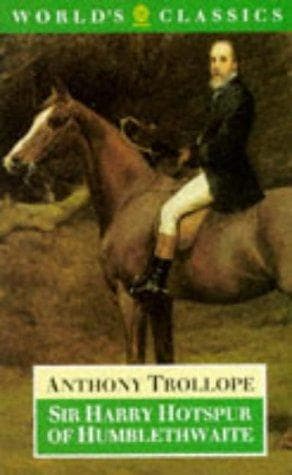
Sir Harry Hotspur of HumblethwaiteTrollope, Anthony
General
Sir Harry Hotspur of Humblethwaite
Trollope, Anthony
Cumberland (England) -- Fiction; Domestic fiction; Fathers and daughters -- Fiction; Inheritance and succession -- Fiction
Yes, George Hotspur was married: and, as far as any love went
with him, had married the woman he liked best. Though the actress
was worlds too good for him, there was not about her that air of
cleanliness and almost severe purity which had so distressed him
while he had been forced to move in the atmosphere of his cousin.
After the copying of the letter and the settlement of the bills, Mrs.
Morton had found no difficulty in arranging matters as she pleased.
She had known the man perhaps better than any one else had known him;
and yet she thought it best to marry him. We must not inquire into
her motives, though we may pity her fate.
She did not intend, however, to yield herself as an easy prey to
his selfishness. She had also her ideas of reforming him, and
ideas which, as they were much less grand, might possibly be more
serviceable than those which for a while had filled the mind and
heart of Emily Hotspur. "George," she said, one day to him, "what
do you mean to do?" This was before the marriage was fixed;--when
nothing more was fixed than that idea of marriage which had long
existed between them.
"Of course we shall be spliced now," said he.
"And if so, what then? I shall keep to the stage, of course."
"We couldn't do with the £500 a year, I suppose, any how?"
"Not very well, I'm afraid, seeing that as a habit you eat and drink
more than that yourself. But, with all that I can do, there must be a
change. I tell you for your own sake as well as for mine, unless you
can drop drinking, we had better give it up even yet." After that,
for a month or two under her auspices, he did "drop it,"--or at least
so far dropped it as to induce her to run the risk. In April they
were married, and she must be added to the list of women who have
sacrificed themselves on behalf of men whom they have known to be
worthless. We need not pursue his career further; but we may be sure,
that though she watched him very closely, and used a power over him
of which he was afraid, still he went gradually from bad to worse,
and was found at last to be utterly past redemption. He was one
who in early life had never known what it was to take delight in
postponing himself to another; and now there was no spark in him of
love or gratitude by which fire could be kindled or warmth created.
It had come to that with him,--that to eat and to drink was all that
was left to him; and it was coming to that too, that the latter of
these two pleasant recreations would soon be all that he had within
his power of enjoyment. There are such men; and of all human beings
they are the most to be pitied. They have intellects; they do think;
the hours with them are terribly long;--and they have no hope!
Public-domain text, read in full here on John Shaqi.
Reviews
Reviews
No reviews yet
Be the first to share your thoughts on this work.
Elsewhere in the archive
Join the Discussion
Join the discussion
Sign in to leave a comment or review.
Sign InorCreate an account