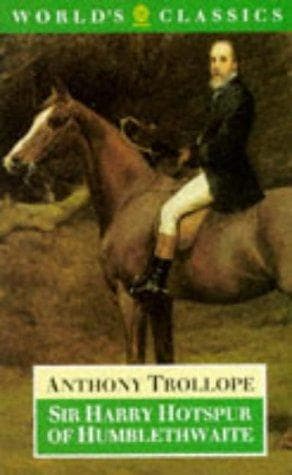
Sir Harry Hotspur of HumblethwaiteTrollope, Anthony
General
Sir Harry Hotspur of Humblethwaite
Trollope, Anthony
Cumberland (England) -- Fiction; Domestic fiction; Fathers and daughters -- Fiction; Inheritance and succession -- Fiction
That look of hers troubled him sadly when he was alone. What was to
be the meaning of it, and what the result? She had given him almost
unasked the only promise which duty required her to give, but at the
same time she had assured him by her countenance, as well as by her
words, that she would be as faithful to her lover as she was prepared
to be obedient to her father. And then if there should come a long
contest of that nature, and if he should see her devoted year after
year to a love which she would not even try to cast off from her, how
would he be able to bear it? He, too, was firm, but he knew himself
to be as tender-hearted as he was obstinate. It would be more than
he could bear. All the world would be nothing for him then. And if
there were ever to be a question of yielding, it would be easier
to do something towards lessening the vileness of the man now than
hereafter. He, too, had some of that knowledge of the world which had
taught Lady Altringham to say that the young people in such contests
could always beat the old people. Thinking of this, and of that look
upon his child's brows, he almost vacillated again. Any amount of
dissipation he could now have forgiven; but to be a liar, too, and a
swindler! Before he went to bed that night he had made up his mind to
go to London and to see Mr. Boltby.
CHAPTER XIV.
PERTINACITY.
On the day but one after the scene narrated in the last chapter
Sir Harry went to London, and Lady Elizabeth and Emily were left
alone together in the great house at Humblethwaite. Emily loved her
mother dearly. The proper relations of life were reversed between
them, and the younger domineered over the elder. But the love
which the daughter felt was probably the stronger on this account.
Lady Elizabeth never scolded, never snubbed, never made herself
disagreeable, was never cross; and Emily, with her strong perceptions
and keen intelligence, knew all her mother's excellence, and loved
it the better because of her mother's weakness. She preferred her
father's company, but no one could say she neglected her mother for
the sake of her father.
Public-domain text, read in full here on John Shaqi.
Reviews
Reviews
No reviews yet
Be the first to share your thoughts on this work.
Elsewhere in the archive
Join the Discussion
Join the discussion
Sign in to leave a comment or review.
Sign InorCreate an account