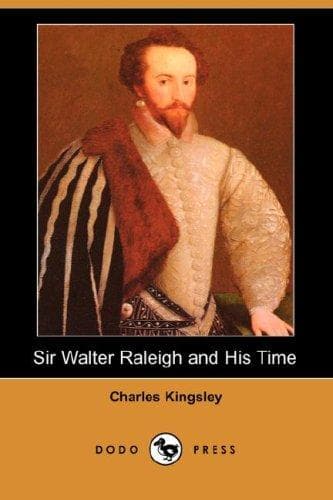
Great Britain -- History; Raleigh, Walter, Sir, 1552?-1618
And now, reader, how does this of Witney, and Woolaston, and Parker’s
intentions to ‘pirate’ separately, if it be true, agree with King James’s
story of Raleigh’s calling a council of war and proposing an attack on
the Plate-fleet? One or the other must needs be a lie; probably both.
Witney’s ship was of only 160 tons; Woolaston’s probably smaller. Five
such ships would be required, as any reader of Hakluyt must know, to take
a single Carack; and it would be no use running the risk of hanging for
any less prize. The Spanish main was warned and armed, and the Western
Isles also. Is it possible that these two men would have been insane
enough in such circumstances to go without Raleigh, if they could have
gone with him? And is it possible that he, if he had any set purpose of
attacking the Plate-fleet, would not have kept them, in order to attempt
that with him which neither they nor he could do without each other.
Moreover, no ‘piratical’ act ever took place; if any had, we should have
heard enough about it; and why is Parker to be believed against Raleigh
alone, when there is little doubt that he slandered all the rest of the
captains? Lastly, it was to this very Parker, with Mr. Tresham and
another gentleman, that Raleigh appealed by name on the scaffold, as
witnesses that it was his crew who tried to keep him from going home, and
not he them.
My own belief is, and it is surely simple and rational enough, that
Raleigh’s ‘brains,’ as he said, ‘were broken’; that he had no distinct
plan: but that, loth to leave the New World without a second attempt on
Guiana, he went up to Newfoundland to re-victual, ‘and with good hope,’
as he wrote to Winwood himself, ‘of keeping the sea till August with some
four reasonable good ships,’ probably, as Oldys remarks, to try a trading
voyage; but found his gentlemen too dispirited and incredulous, his men
too mutinous to do anything; and seeing his ships go home one by one, at
last followed them himself, because he had promised Arundel and Pembroke
so to do; having, after all, as he declared on the scaffold, extreme
difficulty in persuading his men to land at all in England. The other
lies about him, as of his having intended to desert his soldiers in
Guiana, his having taken no tools to work the mine, and so forth, one
only notices to say that the ‘Declaration’ takes care to make the most of
them, without deigning, after its fashion, to adduce any proof but
anonymous hearsays. If it be true that Bacon drew up that famous
document, it reflects no credit either on his honesty or his ‘inductive
science.’
Public-domain text, read in full here on John Shaqi.
Reviews
Reviews
No reviews yet
Be the first to share your thoughts on this work.
Elsewhere in the archive
Join the Discussion
Join the discussion
Sign in to leave a comment or review.
Sign InorCreate an account