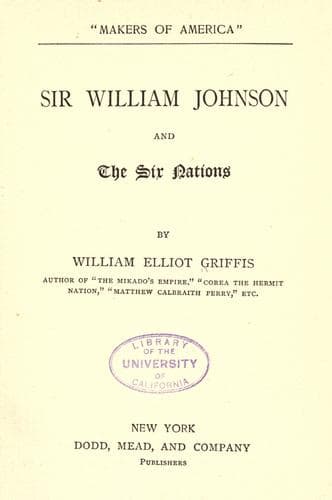
Sir William Johnson and the Six NationsGriffis, William Elliot
History
Sir William Johnson and the Six Nations
Griffis, William Elliot
Johnson, William, 1715-1774; United States -- History -- French and Indian War, 1754-1763
Meanwhile, the governor held counsel with the New England commissioners,
and despite the remonstrances of the members, bluffed off his little
Parliament until October 5. The frontier was still exposed. It was hard
to get volunteers for Oswego, largely owing to the abominable
drunkenness of the officers there, and the lack of good discipline. Two
companies from Colonel Schuyler’s regiment were therefore drafted for
the purpose. It being practically impossible to maintain the weak force
at Saratoga, this post, which had been named Fort Clinton, was burned by
order, and the ordnance and stores removed to Albany. In this unpleasant
state of affairs Colonel Johnson was summoned to New York, and on
October 9 was examined by the committee of the Executive Council. He
exposed the grave state of affairs, in that the Indians had been kept
from hunting for a whole year, and were now destitute. Unless something
were speedily done, he felt he must abandon Mount Johnson and his
interests in the Mohawk Valley. He even imagined that his leaving would
be the general signal for an exodus of all the white people from the
Mohawk basin. He recommended the erection of forts both in the Seneca
and the Oneida districts. He believed that these measures, with plenty
of presents, and the ferreting out of the miscellaneous rumsellers who
debauched the Indians, would make safe the northern frontier and save
the colony.
Clinton’s message to the Assembly, October 6, was presented with high
praises of Johnson, a vindication of himself, and an exhortation to act
promptly and liberally, as the Iroquois sachems were waiting with
Johnson in the city to see what would be done in their behalf. The
conquest of Crown Point was still in view; and men, money, and supplies
were asked for. It was intimated that the Crown (the mother country) had
already done its full part, and that the colonies should now do theirs.
Public-domain text, read in full here on John Shaqi.
Reviews
Reviews
No reviews yet
Be the first to share your thoughts on this work.
Join the Discussion
Join the discussion
Sign in to leave a comment or review.
Sign InorCreate an account