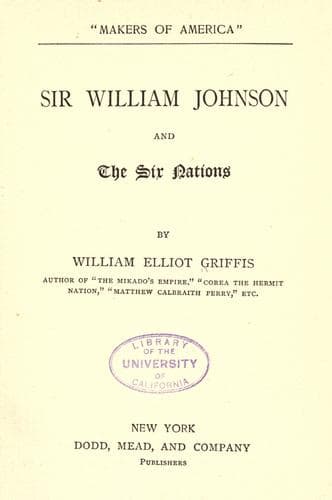
Sir William Johnson and the Six NationsGriffis, William Elliot
History
Sir William Johnson and the Six Nations
Griffis, William Elliot
Johnson, William, 1715-1774; United States -- History -- French and Indian War, 1754-1763
With all formality of pipes and tobacco, splendour of Indian and
civilized costume, the council opened next morning. It was a contest of
tongues, and one garrulous Irishman was here to enter the lists and to
pit himself, with seemingly interminable prolixity of speech and the
fixed ammunition of Indian rhetoric, against a host of tireless tongues.
With plenty of talk to fill their ears and abundance of good things to
tickle their stomachs, Johnson succeeded in strengthening the covenant
of Corlaer; and the issue of the council was, on the whole, all that,
even to Johnson, could be expected. In reporting results, Johnson
suggested to the governor that proper regulation of the sale of rum
among the Indians was the first thing to be considered.
Clinton, while happy in knowing that the Iroquois would come to the
Albany council, was brooding over the tendency everywhere manifest in
the colonies to assert their independence. Johnson’s full report of the
tongue-victory at the Onondaga council was laid before the Assembly,
June 21. The governor added, that to hold the Indians loyal to the
English it would be necessary to prosecute the expedition against Crown
Point, and at once make arrangements for exchange of prisoners. In this
latter suggestion, and with that recommending a severe enactment against
rumsellers, the Assembly at once concurred. A few days after came news
of the treaty of peace at Aix-la-Chapelle.
Johnson, by unremitting exertion, had succeeded in securing the largest
attendance of Indians that had ever assembled in Albany. They came from
all the tribes of the Confederacy and from the lake region westward,
besides remnants of New England and Hudson River Indians. Many of these
Indians had never seen a civilized town, and greatly enjoyed the regular
meals and other comforts of civilization, while interested in studying
houses with chimneys, carpets, glass windows, and other things unknown
to forest life. Great preparations had been made to receive them and to
keep them in the best of humour. What with the clerks, quartermasters,
interpreters, and others of the official class, the militia and the
citizens, the farming folk who had flocked into the city to see the
sights, in addition to villagers from the region around, Albany had
never before beheld so large a population, nor shown such picturesque
activity in her streets. In the oldest city in any of the colonies north
of the municipality on Manhattan Island, these few days in the month of
July were long remembered.
The eighteenth day of July had come; and all the Indians expected,
hundreds in number, had already arrived, and were beginning to think
“Brother Corlaer” was as dilatory as his war operations had all along
been. Governor Shirley and the Massachusetts commissioners, however, had
come; and all lay down at night expecting the great palaver would be but
a day or two off. But before Clinton was to arrive, they were to learn
how near the enemy was even at that moment.
Public-domain text, read in full here on John Shaqi.
Reviews
Reviews
No reviews yet
Be the first to share your thoughts on this work.
Elsewhere in the archive
Join the Discussion
Join the discussion
Sign in to leave a comment or review.
Sign InorCreate an account