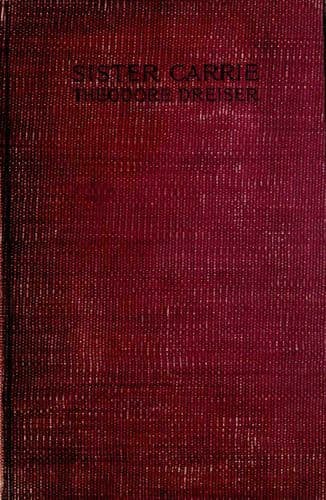
Chicago (Ill.) -- Fiction; Didactic fiction; Mistresses -- Fiction; New York (N.Y.) -- Fiction; Young women -- Fiction
The next night, walking to the theatre, she encountered him face to
face. He was waiting, more gaunt than ever, determined to see her, if he
had to send in word. At first she did not recognise the shabby, baggy
figure. He frightened her, edging so close, a seemingly hungry stranger.
"Carrie," he half whispered, "can I have a few words with you?"
She turned and recognised him on the instant. If there ever had lurked
any feeling in her heart against him, it deserted her now. Still, she
remembered what Drouet said about his having stolen the money.
"Why, George," she said; "what's the matter with you?"
"I've been sick," he answered. "I've just got out of the hospital. For
God's sake, let me have a little money, will you?"
"Of course," said Carrie, her lip trembling in a strong effort to
maintain her composure. "But what's the matter with you, anyhow?"
She was opening her purse, and now pulled out all the bills in it--a
five and two twos.
"I've been sick, I told you," he said, peevishly, almost resenting her
excessive pity. It came hard to him to receive it from such a source.
"Here," she said. "It's all I have with me."
"All right," he answered, softly. "I'll give it back to you some day."
Carrie looked at him, while pedestrians stared at her. She felt the
strain of publicity. So did Hurstwood.
"Why don't you tell me what's the matter with you?" she asked, hardly
knowing what to do. "Where are you living?"
"Oh, I've got a room down in the Bowery," he answered. "There's no use
trying to tell you here. I'm all right now."
He seemed in a way to resent her kindly inquiries--so much better had
fate dealt with her.
"Better go on in," he said. "I'm much obliged, but I won't bother you
any more."
She tried to answer, but he turned away and shuffled off toward the
east.
For days this apparition was a drag on her soul before it began to wear
partially away. Drouet called again, but now he was not even seen by
her. His attentions seemed out of place.
"I'm out," was her reply to the boy.
So peculiar, indeed, was her lonely, self-withdrawing temper, that she
was becoming an interesting figure in the public eye--she was so quiet
and reserved.
Not long after the management decided to transfer the show to London. A
second summer season did not seem to promise well here.
"How would you like to try subduing London?" asked her manager, one
afternoon.
"It might be just the other way," said Carrie.
"I think we'll go in June," he answered.
In the hurry of departure, Hurstwood was forgotten. Both he and Drouet
were left to discover that she was gone. The latter called once, and
exclaimed at the news. Then he stood in the lobby, chewing the ends of
his moustache. At last he reached a conclusion--the old days had gone
for good.
"She isn't so much," he said; but in his heart of hearts he did not
believe this.
Public-domain text, read in full here on John Shaqi.
Reviews
Reviews
No reviews yet
Be the first to share your thoughts on this work.
Elsewhere in the archive
Join the Discussion
Join the discussion
Sign in to leave a comment or review.
Sign InorCreate an account