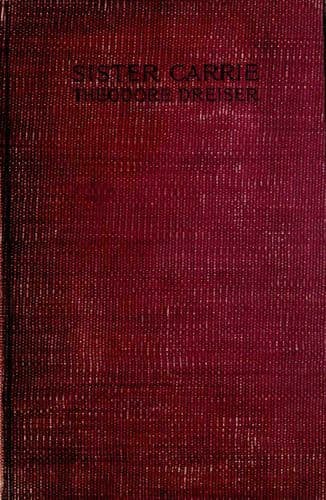
Chicago (Ill.) -- Fiction; Didactic fiction; Mistresses -- Fiction; New York (N.Y.) -- Fiction; Young women -- Fiction
At eleven o'clock of another evening, perhaps two weeks later, he was at
the midnight offering of a loaf--waiting patiently. It had been an
unfortunate day with him, but now he took his fate with a touch of
philosophy. If he could secure no supper, or was hungry late in the
evening, here was a place he could come. A few minutes before twelve, a
great box of bread was pushed out, and exactly on the hour a portly,
round-faced German took position by it, calling "Ready." The whole line
at once moved forward, each taking his loaf in turn and going his
separate way. On this occasion, the ex-manager ate his as he went,
plodding the dark streets in silence to his bed.
By January he had about concluded that the game was up with him. Life
had always seemed a precious thing, but now constant want and weakened
vitality had made the charms of earth rather dull and inconspicuous.
Several times, when fortune pressed most harshly, he thought he would
end his troubles; but with a change of weather, or the arrival of a
quarter or a dime, his mood would change, and he would wait. Each day he
would find some old paper lying about and look into it, to see if there
was any trace of Carrie, but all summer and fall he had looked in vain.
Then he noticed that his eyes were beginning to hurt him, and this
ailment rapidly increased until, in the dark chambers of the lodgings he
frequented, he did not attempt to read. Bad and irregular eating was
weakening every function of his body. The one recourse left him was to
doze when a place offered and he could get the money to occupy it.
He was beginning to find, in his wretched clothing and meagre state of
body, that people took him for a chronic type of bum and beggar. Police
hustled him along, restaurant and lodging-house keepers turned him out
promptly the moment he had his due; pedestrians waved him off. He found
it more and more difficult to get anything from anybody.
At last he admitted to himself that the game was up. It was after a long
series of appeals to pedestrians, in which he had been refused and
refused--every one hastening from contact.
"Give me a little something, will you, mister?" he said to the last one.
"For God's sake, do; I'm starving."
"Aw, get out," said the man, who happened to be a common type himself.
"You're no good. I'll give you nawthin'."
Hurstwood put his hands, red from cold, down in his pockets. Tears came
into his eyes.
"That's right," he said; "I'm no good now. I was all right. I had money.
I'm going to quit this," and, with death in his heart, he started down
toward the Bowery. People had turned on the gas before and died; why
shouldn't he? He remembered a lodging-house where there were little,
close rooms, with gas-jets in them, almost pre-arranged, he thought, for
what he wanted to do, which rented for fifteen cents. Then he remembered
that he had no fifteen cents.
On the way he met a comfortable-looking gentleman, coming, clean-shaven,
out of a fine barber shop.
Public-domain text, read in full here on John Shaqi.
Reviews
Reviews
No reviews yet
Be the first to share your thoughts on this work.
Elsewhere in the archive
Join the Discussion
Join the discussion
Sign in to leave a comment or review.
Sign InorCreate an account