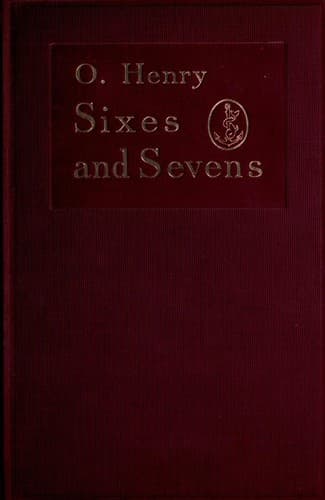
American fiction -- 20th century; Short stories, American
When Aglaia was four years old she and her father used to go through a
little performance in the mill every afternoon, that never failed to
come off, the weather permitting. When supper was ready her mother
would brush her hair and put on a clean apron and send her across to
the mill to bring her father home. When the miller saw her coming in
the mill door he would come forward, all white with the flour dust, and
wave his hand and sing an old miller’s song that was familiar in those
parts and ran something like this:
“The wheel goes round,
The grist is ground,
The dusty miller’s merry.
He sings all day,
His work is play,
While thinking of his dearie.”
Then Aglaia would run to him laughing, and call:
“Da-da, come take Dums home;” and the miller would swing her to his
shoulder and march over to supper, singing the miller’s song. Every
evening this would take place.
One day, only a week after her fourth birthday, Aglaia disappeared.
When last seen she was plucking wild flowers by the side of the road in
front of the cottage. A little while later her mother went out to see
that she did not stray too far away, and she was already gone.
Of course every effort was made to find her. The neighbours gathered
and searched the woods and the mountains for miles around. They dragged
every foot of the mill race and the creek for a long distance below the
dam. Never a trace of her did they find. A night or two before there
had been a family of wanderers camped in a grove near by. It was
conjectured that they might have stolen the child; but when their wagon
was overtaken and searched she could not be found.
The miller remained at the mill for nearly two years; and then his hope
of finding her died out. He and his wife moved to the Northwest. In a
few years he was the owner of a modern mill in one of the important
milling cities in that region. Mrs. Strong never recovered from the
shock caused by the loss of Aglaia, and two years after they moved away
the miller was left to bear his sorrow alone.
When Abram Strong became prosperous he paid a visit to Lakelands and
the old mill. The scene was a sad one for him, but he was a strong man,
and always appeared cheery and kindly. It was then that he was inspired
to convert the old mill into a church. Lakelands was too poor to build
one; and the still poorer mountaineers could not assist. There was no
place of worship nearer than twenty miles.
Public-domain text, read in full here on John Shaqi.
Reviews
Reviews
No reviews yet
Be the first to share your thoughts on this work.
Elsewhere in the archive
Join the Discussion
Join the discussion
Sign in to leave a comment or review.
Sign InorCreate an account