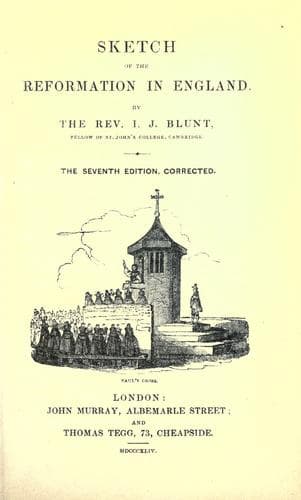
Sketch of the Reformation in EnglandBlunt, John J. (John James)
History
Sketch of the Reformation in England
Blunt, John J. (John James)
Great Britain -- Church history; Reformation -- England
[151] See Gilly’s Researches among the Vaudois, 76., and his Second
Visit, 219. It appears that the several liturgies of Geneva, Neufchatel
and Lausanne are used at present; but that of Geneva by the majority
of the pastors. On comparing the brief sketch of this service (given
by Mr. Gilly as the one of La Torre) with the Geneva “Forme of Common
Praires, made by Master John Calvyne,” we may conjecture that the
latter is in a great measure retained.
[152] See Dante’s Purgatorio, c. xvi. xxxii. Petrarc. Son. 196.
[153] De Christianarum Ecclesiar. Successione et Statu. c. vi. § 19. 33.
[154] Eccl. Biog. i. 99.
[155] See Mr. Gilly’s Narrative, 78.
[156] Ellis’s Letters, i. 110. 2d Series.
[157] Ecc. Biog. i. 234.
[158] Latin was the common language of schools also before and at the
Reformation. In the “Monita Pædagogica ad suos Discipulos” of Lily, the
grammarian, and first master of Paul’s, is the following admonition:--
“Et quoties loqueris, memor esto loquare _Latine_,
Et veluti scopulos barbara verba fuge.”
[159] Ecc. Biog. i. 30. note.
[160] Inferno, c. ix.
[161] Ecc. Biog. i. 97, 98.
[162] Mark, xi. 32.
[163] See Milner’s History of the Church, iv. 109.
[164] See Milner’s History of the Church, iv. 130–136.
[165] See Wickliffe’s Life as given in Fox, extracted in Wordsworth’s
Ecc. Biog. i. 52. 121.
[166] 1 Sam. ii. 17. 24.
[167] Matt. xxiii. 2, 3.
[168] Ecc. Biog. i. 53.
[169] Ecc. Biog. i. 22.
[170] Ecc. Biog. i. 125. 138.
[171] Ecc. Biog. i. 120, 121. 125.
[172] Ecc. Biog. i. 162.
[173] Ecc. Biog. i. 182.
[174] See the opinions of this reformer, collected from his works, in
the Rev. H. Baber’s life of him, p. 32.
[175] Ecc. Biog. i. 170.
[176] Ecc. Biog. i. 176.
[177] In one particular, this peculiarity of the Lollard must have
administered a very wholesome rebuke to a sin of the times. He would
not swear by any of the members of Christ’s body, which was the
heedless fashion of the day, but would content himself with such an
affirmation, as “I am syker it is _soth_.” (See the Rev. H.
Baber’s Memoirs of Wickliffe, prefixed to his Translation of the New
Testament, p. 35.) May not the phrase a “_yea-forsooth_ knave,”
used by Falstaff (2 Hen. IV, ii. sc. 2,) have been a popular term
of obloquy, originally applied to the Lollards by the dissolute and
profane? See also Chaucer, “The Shipmanne’s Prologue.”
[178] Neal’s Hist. of Puritans, i. 6.
[179] Fox, i. 740.
[180] Isaiah, lv. 10, 11.
[181] Ecc. Biog. i. 290; where Fox and others attest these things.
Public-domain text, read in full here on John Shaqi.
Reviews
Reviews
No reviews yet
Be the first to share your thoughts on this work.
Elsewhere in the archive
Join the Discussion
Join the discussion
Sign in to leave a comment or review.
Sign InorCreate an account