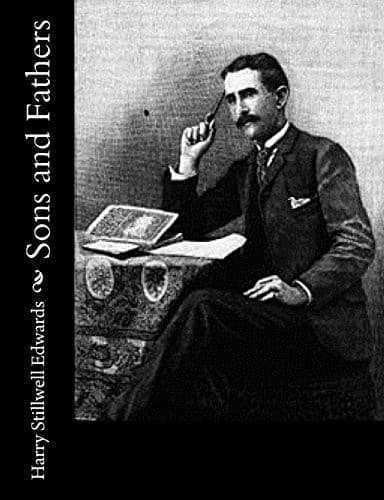
Mystery fiction; Race relations -- Fiction; Southern States -- Fiction
"Mrs. Montjoy, do you not know me? Have I indeed changed so much?"
The needles ceased to contend and the work slipped from the smooth
little hands. A frightened look overspread the gentle face.
"Who is it speaks? Sometime I must have known that voice."
"It is Marion Evan." The visitor bent her head upon her own arms and
gave way to her emotion. Mrs. Montjoy had repeated the name
unconsciously and was silent. But presently, feeling the figure bent
before her struggling in the grasp of its emotion, she placed both hands
upon the shapely head and gently stroked its beautiful hair, now lined
with silver.
"You have suffered," she said simply. "Why did you leave us? Why have
you been silent all these years?"
"For my father's sake. They have thought me cold, heartless, abandoned.
I have crucified my heart to save his." She spoke with vehement passion.
"Hush, my child," said the elder lady; "you must calm yourself. Tell me
all; let me help you. You used to tell me all your troubles and I used
to call you daughter in the old times. Do you remember?"
"Ah, madame, if I did not I would not be here now. Indeed you were
always kind and good to Marion."
And so, living over the old days, they came to learn again each other's
heart and find how little time and the incidents of life had changed
them. And sitting there beneath the sympathetic touch and eyes of her
lifetime friend, Cambia told her story.
"I was not quite 17, madame, you remember, when it happened. How, I do
not know; but I thought then I must have been born for Gaspard Levigne.
From the moment I saw him, the violin instructor in our institution, I
loved him. His voice, his music, his presence, without effort of his,
deprived me of any resisting power; I did not seek to resist. I advanced
in my art until its perfection charmed him. I had often seen him
watching me with a sad and pensive air and he once told me that my face
recalled a very dear friend, long dead. I sang a solo in a concert; he
led the orchestra; I sang to him. The audience thought it was the
debutante watching her director, but it was a girl of 17 singing to the
only man the world held for her. He heard and knew.
"From that day we loved; before, only I loved. He was more than double
my age, a handsome man, with a divine art; and I--well, they called me
pretty--made him love me. We met at every opportunity, and when
opportunities did not offer we made them, those innocent, happy trysts.
"Love is blind not only to faults but to all the world. We were
discovered and he was blamed. The great name of the institution might be
compromised--its business suffer. He resigned.
Public-domain text, read in full here on John Shaqi.
Reviews
Reviews
No reviews yet
Be the first to share your thoughts on this work.
Elsewhere in the archive
Join the Discussion
Join the discussion
Sign in to leave a comment or review.
Sign InorCreate an account