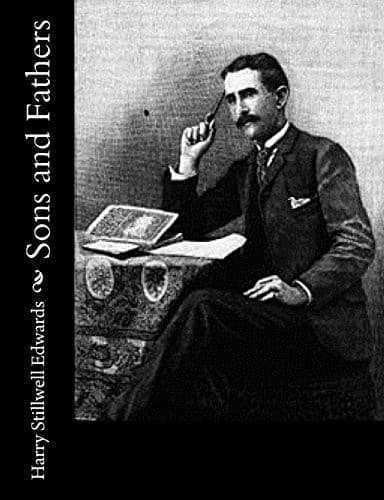
Mystery fiction; Race relations -- Fiction; Southern States -- Fiction
"Good-night." The professor gazed about him. "How was it you used to say
good-night, Edward? Old customs are good. It is not possible that the
violin has been lost." He smiled and Edward got his instrument and
played. He knew the old man's favorites; the little folk-melodies of the
Rhine country, bits of love songs, mostly, around which the loving
players of Germany have woven so many beautiful fancies. And in the
playing Edward himself was quieted.
The light from the hall downstairs streamed out along the gravel walk,
and in the glare was a man standing with arms folded and head bent
forward. A tall woman came and gently laid her hand upon him. He started
violently, tossed his arms aloft and rushed into the darkness. She
waited in silence a moment and then slowly followed him.
CHAPTER XVII.
"IF I MEET THE MAN!"
When Edward opened the morning paper, which he did while waiting for the
return of the professor, who had wandered away before breakfast, he was
shocked by the announcement of Montjoy's defeat. The result of the vote
in the remote county had been secured by horseback service organized by
an enterprising journal, and telegraphed. The official returns were
given.
Already the campaign had drifted far into the past with him; years
seemed to have gone by when he arose from the sick-bed and now it
scarcely seemed possible that he, Edward Morgan, was the same man who
labored among the voters, shouted himself hoarse and kept the
headquarters so successfully. It must have been a dream.
But Mary! That part was real. He wrote her a few lines expressing his
grief.
And then came the professor, with his adventure! He had met a young man
out making photographs and had interested him with descriptions of
recent successful attempts to photograph in colors. And then they had
gone to the wing-room and examined the results of the young man's
efforts to produce pictures upon living substances. "He has some of the
most original theories and ideas upon the subject I have heard," said
the German. "Not wild beyond the possibilities of invention, however,
and I am not sure but that he has taught me a lesson in common sense.
'Find how nature photographs upon living tissue,' said the young man,
'and when you have reduced your pictures to the invisible learn to
re-enlarge them; perhaps you will learn to enlarge nature's invisibles.'
Public-domain text, read in full here on John Shaqi.
Reviews
Reviews
No reviews yet
Be the first to share your thoughts on this work.
Elsewhere in the archive
Join the Discussion
Join the discussion
Sign in to leave a comment or review.
Sign InorCreate an account