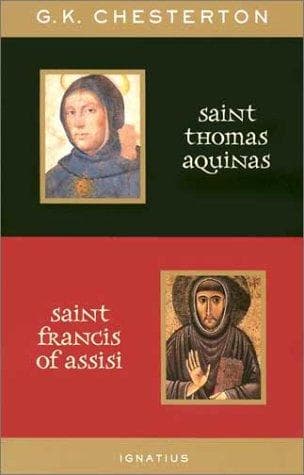
St. Francis of AssisiChesterton, G. K. (Gilbert Keith)
Religion
St. Francis of Assisi
Chesterton, G. K. (Gilbert Keith)
Francis, of Assisi, Saint, 1182-1226
His later voyage was more successful, so far as arriving at the scene of
operations was concerned. He arrived at the headquarters of the Crusade
which was in front of the besieged city of Damietta, and went on in his
rapid and solitary fashion to seek the headquarters of the Saracens. He
succeeded in obtaining an interview with the Sultan; and it was at that
interview that he evidently offered, and as some say proceeded, to fling
himself into the fire as a divine ordeal, defying the Moslem religious
teachers to do the same. It is quite certain that he would have done so
at a moment's notice. Indeed throwing himself into the fire was hardly
more desperate, in any case, than throwing himself among the weapons and
tools of torture of a horde of fanatical Mahomedans and asking them to
renounce Mahomet. It is said further that the Mahomedan muftis showed
some coldness towards the proposed competition, and that one of them
quietly withdrew while it was under discussion; which would also appear
credible. But for whatever reason Francis evidently returned as freely
as he came. There may be something in the story of the individual
impression produced on the Sultan, which the narrator represents as a
sort of secret conversion. There may be something in the suggestion that
the holy man was unconsciously protected among half-barbarous orientals
by the halo of sanctity that is supposed in such places to surround an
idiot. There is probably as much or more in the more generous
explanation of that graceful though capricious courtesy and compassion
which mingled with wilder things in the stately Soldans of the type and
tradition of Saladin. Finally, there is perhaps something in the
suggestion that the tale of St. Francis might be told as a sort of
ironic tragedy and comedy called The Man Who Could Not Get Killed. Men
liked him too much for himself to let him die for his faith; and the man
was received instead of the message. But all these are only converging
guesses at a great effort that is hard to judge, because it broke off
short like the beginnings of a great bridge that might have united East
and West, and remains one of the great might-have-beens of history.
Public-domain text, read in full here on John Shaqi.
Reviews
Reviews
No reviews yet
Be the first to share your thoughts on this work.
Elsewhere in the archive
Join the Discussion
Join the discussion
Sign in to leave a comment or review.
Sign InorCreate an account