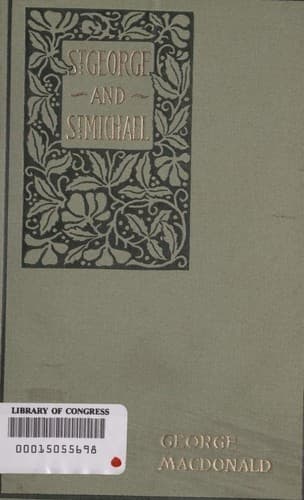
Great Britain -- History -- Civil War, 1642-1649 -- Fiction
'And you do not find me such?' sighed Scudamore, with a smile meant to
be both humble and bewitching.
'N-n-o. Thou hast not made me desire to hold with thee much converse.'
'Tell me why, cousin, that I may reform that which offends thee.'
'If a man see not his faults with his own eyes, how shall he see them
with the eyes of another?'
'Wilt thou never love me, Dorothy?--not even a little?'
'Wherefore should I love thee, Rowland?'
'We are commanded to love even our enemies.'
'Art thou then mine enemy, cousin?'
'No, forsooth! I am the most loving friend thou hast.'
'Then am I sorely to be pitied.'
'For having my love?'
'Nay; for having none better than thine. But thank God, it is not so.'
'Must I then be thine enemy indeed before thou wilt love me?'
'No, cousin: cease to be thine own enemy and I will call thee my
friend.'
'Marry! wherein then am I mine own enemy? I lead a sober life enough--as
thou seest, ever under the eye of my lord.'
'But what wouldst thou an' thou wert from under the eye of thy lord? I
know thee better than thou thinkest, cousin. I have read thy title-page,
if not thy whole book.'
'Tell me then how runneth my title-page, cousin.'
'The art of being wilfully blind, or The way to see no farther than one
would.'
'Fair preacher,--' began Rowland, but Dorothy interrupted him.
'Nay then, an' thou betake thee to thy jibes, I have done,' she said.
'Be not angry with me; it is but my nature, which for thy sake I will
control. If thou canst not love me, wilt thou not then pity me a
little?'
'That I may pity thee, answer me what good thing is there in thee
wherefore I should love thee.'
'Wouldst thou have a man trumpet his own praises?'
'I fear not that of thee who hast but the trumpet--I will tell thee this
much: I have never seen in thee that thou didst love save for the
pastime thereof. I doubt if thou lovest thy master for more than thy
place.'
'Oh cousin!'
'Be honest with thyself, Rowland. If thou would have me for thy cousin,
it must be on the ground of truth.'
Rowland possessed at least good nature: few young men would have borne
to be so severely handled. But then, while one's good opinion of himself
remains untroubled, confesses no touch, gives out no hollow sound,
shrinks not self-hurt with the doubt of its own reality, hostile
criticism will not go very deep, will not reach to the quick. The thing
that hurts is that which sets trembling the ground of self-worship, lays
bare the shrunk cracks and wormholes under the golden plates of the
idol, shows the ants running about in it, and renders the foolish smile
of the thing hateful. But he who will then turn away from his imagined
self, and refer his life to the hidden ideal self, the angel that ever
beholds the face of the Father, shall therein be made whole and sound,
alive and free.
Public-domain text, read in full here on John Shaqi.
Reviews
Reviews
No reviews yet
Be the first to share your thoughts on this work.
Elsewhere in the archive
Join the Discussion
Join the discussion
Sign in to leave a comment or review.
Sign InorCreate an account