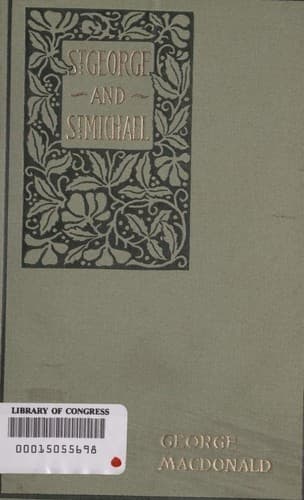
Great Britain -- History -- Civil War, 1642-1649 -- Fiction
Some months before the battle of Naseby, which was fought in June early,
that is, in the year 1645, the plans of the king having now ripened, he
gave a secret commission for Ireland to the earl of Glamorgan, with
immense powers, among the rest that of coining money, in order that he
might be in a position to make proposals towards certain arrangements
with the Irish catholics, which, in view of the prejudices of the king's
protestant council, it was of vital importance to keep secret. Glamorgan
therefore took a long leave of his wife and family, and in the month of
March set out for Dublin. At Caernarvon, they got on board a small
barque, laden with corn, but, in rough weather that followed, were cast
ashore on the coast of Lancashire. A second attempt failed also, for,
pursued by a parliament vessel, they were again compelled to land on the
same coast. It was the middle of summer before they reached Dublin.
During this period there was of course great anxiety in Raglan, the
chief part of which was lady Glamorgan's. At times she felt that but for
the sympathy of Dorothy, often silent but always ministrant, she would
have broken down quite under the burden of ignorance and its attendant
anxiety.
In the prolonged absence of her husband, and the irregularity of
tidings, for they came at uncertain as well as wide intervals, her
yearnings after her vanished Molly, which had become more patient,
returned with all their early vehemence, and she began to brood on the
meeting beyond the grave of which her religion waked her hope. Nor was
this all: her religion itself grew more real; for although there is
nothing essentially religious in thinking of the future, although there
is more of the heart of religion in the taking of strength from the love
of God to do the commonest duty, than in all the longing for a blessed
hereafter of which the soul is capable, yet the love of a little child
is very close to the love of the great Father; and the loss that sets
any affection aching and longing, heaves, as on a wave from the very
heart of the human ocean, the labouring spirit up towards the source of
life and restoration. In like manner, from their common love to the
child, and their common sense of loss in her death, the hearts of the
two women drew closer to each other, and protestant mistress Dorothy was
able to speak words of comfort to catholic lady Glamorgan, which the
hearer found would lie on the shelf of her creed none the less quietly
that the giver had lifted them from the shelf of hers.
One evening, while yet lady Glamorgan had had no news of her husband's
arrival in Ireland, and the bright June weather continued clouded with
uncertainty and fear, lady Broughton came panting into her parlour with
the tidings that a courier had just arrived at the main entrance,
himself pale with fatigue, and his horse white with foam.
Public-domain text, read in full here on John Shaqi.
Reviews
Reviews
No reviews yet
Be the first to share your thoughts on this work.
Elsewhere in the archive
Join the Discussion
Join the discussion
Sign in to leave a comment or review.
Sign InorCreate an account