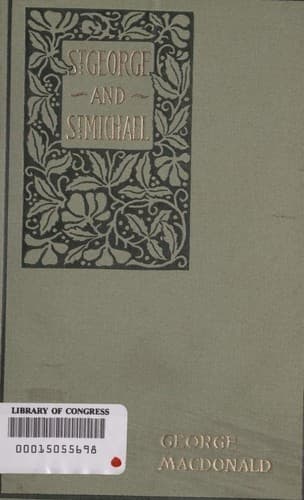
Great Britain -- History -- Civil War, 1642-1649 -- Fiction
'And truly were it not better to be well buried under the ruins,' he
would say to himself, looking down with a sigh at his great bulk, which
added so much to the dismalness of the prospect of being, in his
seventieth year, a prisoner or a wanderer--the latter a worse fate even
than the former. To be no longer the master of his own great house, of
many willing servants, of all ready appliances for liberty and comfort,
while the weight of his clumsy person must still hang about him, and his
unfitness to carry the same go on increasing with the bulk to be
carried--such a prospect required something more than loyalty to meet it
with equanimity. To the young and strong, adventure ought always to be
more attractive than ease, but none save those who are themselves within
sight of old age can truly imagine what an utter horror the breach of
old habits and loss of old comforts is to the aged.
But to the good marquis it was consolation enough to repeat to himself
the text from his precious Vulgate: SCIMUS ENIM; FOR WE KNOW THAT IF OUR
EARTHLY HOUSE OF THIS TABERNACLE WERE DISSOLVED, WE HAVE A BUILDING OF
GOD, AN HOUSE NOT MADE WITH HANDS, ETERNAL IN THE HEAVENS.
For the ladies, so long as their father-chief was with them, they were
at least not too anxious. Whatever was done must be the right thing, and
in the midst of tumult and threat they were content. If only their
Edward had been with them too!
But surrender, even when the iron shot was driving his stately house
into showers of dirt, the marquis found it hard indeed to contemplate.
The eastern side of the stone court was now little better than a heap of
rubbish, and the hour of assault could not be far off, although as yet
there had been no second summons; but he could not forget that, though
the castle was his, it was not for himself but for his king he held it
garrisoned, and how could he yield it without the approval of his
sovereign? The governor shared in the same chivalry with his father, and
was equally anxious for a word from the king. But that king was a
prisoner in the hands of a hostile nation, and how was he to receive
message or return answer? Nay, how were they to send message or receive
answer, not even knowing with certainty where his majesty was, and but
presuming that he was still at Newcastle? And not to mention
difficulties at every step of the way, their house itself was so beset
that no one could issue from its gates without risk of being stopped,
searched, detained until it should have fallen. For the besiegers knew
well enough that lord Glamorgan was still in Ireland, straining his
utmost on behalf of the king; and what more likely than that he should,
with the men he was still raising in Ireland, make some desperate
attempt to turn the scales of war, striking first, it might well be, for
the relief of his father's castle?
Public-domain text, read in full here on John Shaqi.
Reviews
Reviews
No reviews yet
Be the first to share your thoughts on this work.
Elsewhere in the archive
Join the Discussion
Join the discussion
Sign in to leave a comment or review.
Sign InorCreate an account