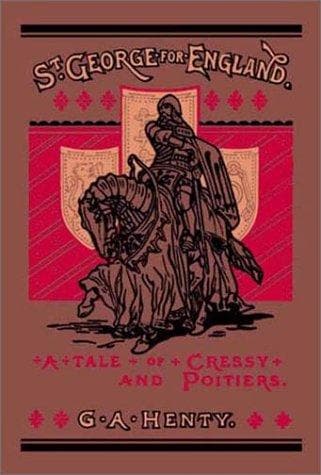
St. George for EnglandHenty, G. A. (George Alfred)
History
St. George for England
Henty, G. A. (George Alfred)
Great Britain -- History -- Edward III, 1327-1377 -- Fiction
Walter's first step on assuming the command was to examine thoroughly
into the capabilities of defence of the place, to see that the well was
in good order, and the supply of water ample, and to send out a foraging
party, which, driving in a number of beasts and some cart-loads of
forage, would supply his garrison for some time. The castle he found
was less strong than it looked. The walls were lightly built, and were
incapable of withstanding any heavy battering. The moat was dry, and
the flanking towers badly placed, and affording little protection to the
faces of the walls; however, the extent of the defences was small, and
Walter felt confident that with the force at his command he could resist
any sudden attack, unless made in overwhelming force, so that all the
faces of the wall could be assaulted at the same time. He had a large
number of great stones brought in to pile against the gate, while others
were brought into the central keep, similarly to defend the door should
the outer wall be carried. He appointed Ralph as his lieutenant, and
every day, leaving him in charge of the castle, rode through the country
for many miles round, with twenty men-at-arms, to convince himself
that no considerable force of the enemy were approaching. These
reconnaissances were not without some danger and excitement, for several
times bodies of the country people, armed with scythes, axes, and
staves, tried to intercept them on their return to the castle, and
once or twice Walter and his men had to fight their way through their
opponents. Contrary to the custom of the times, Walter gave orders to
his men not to slay any when resistance had ceased.
“They are but doing what we ourselves should do did French garrisons
hold our castles at home, and I deem them in no way to be blamed for the
efforts which they make to slay us. In self-defence, of course, we must
do our best, and must kill in order that we may not ourselves be slain;
but when they are once routed, let them go to their homes. Poor people,
the miseries which this war has brought upon them are great, and there
is no wonder that they hate us.”
Public-domain text, read in full here on John Shaqi.
Reviews
Reviews
No reviews yet
Be the first to share your thoughts on this work.
Elsewhere in the archive
Join the Discussion
Join the discussion
Sign in to leave a comment or review.
Sign InorCreate an account