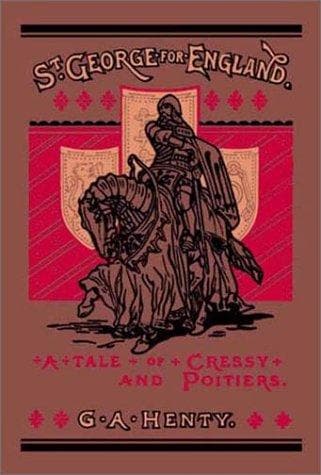
St. George for EnglandHenty, G. A. (George Alfred)
History
St. George for England
Henty, G. A. (George Alfred)
Great Britain -- History -- Edward III, 1327-1377 -- Fiction
The other four were between the ages of nineteen and twenty-one, and all
belonged to the families of the highest nobility of England, it being
deemed a distinguished honour to be received as a squire by the most
gallant knight at the court of England. Their duties were, as Walter
soon learned, almost nominal, these being discharged almost exclusively
by John Mervaux. Two of the young esquires, Richard Coningsby and Edward
Clifford, had fought in the melee, having been among the ten leaders
under Clarence Aylmer. They bore no malice for the defeat, but received
Walter with cordiality and kindness, as did the other young men. Walter
on his arrival acquainted the knight with Ralph's wish to follow him,
and requested permission for him to do so. This was readily granted,
Sir Walter Manny telling the lad that although esquires were supposed
to wait entirely upon themselves, to groom their horses, and keep their
armour and arms bright and in good order, yet, in point of fact, young
men of good families had the greater part of these duties performed for
them by a retainer who rode in the ranks of their master's following as
a man-at-arms.
“The other esquires have each one of their father's retainers with them,
and I am glad that you should be in the same position. After you have
taken your midday meal you had best go across to the Earl of Talbot's
and inquire for the Lady Vernon, who is still staying with him. She told
me at the king's ball last night that she wished to have speech with
you, and I promised to acquaint you with her desire. By the way, dost
know aught of riding?”
“I have learnt to sit on a horse, Sir Walter,” the lad answered. “My
good friend Geoffrey, the armourer, advised that I should learn, and
frequently hired from the horse-dealer an animal for my use. I have
often backed half-broken horses which were brought up by graziers from
Kent and Sussex for use in the wars. Many of them abode at the hostels
at Southwark, and willingly enough granted me permission to ride their
horses until they were sold. Thus I have had a good deal of practice,
and that of a rough kind; and seeing that latterly the horses have, for
the most part, found it difficult to fling me when sitting barebacked
across them, I think I could keep my seat in the high-peaked saddles on
the most vicious, but I have had no practice at tilting, or at the ring,
or other knightly exercises.”
“That matters not at all,” the knight said. “All these knightly
exercises which you speak of are good in time of peace, for they give
proficiency and steadiness, but in time of war he who can sit firmly
in his saddle and wield sword and battle-axe lustily and skillfully is
equal to the best; but never fear, when this expedition is over, and we
have time for such things, I will see that you are instructed in them.
One who has achieved so much martial skill as you have done at so early
an age will have little difficulty in acquiring what may be termed the
pastime of chivalry.”
Public-domain text, read in full here on John Shaqi.
Reviews
Reviews
No reviews yet
Be the first to share your thoughts on this work.
Join the Discussion
Join the discussion
Sign in to leave a comment or review.
Sign InorCreate an account