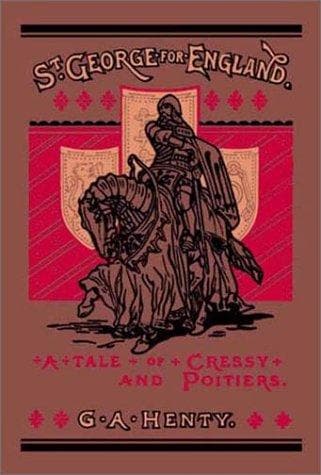
St. George for EnglandHenty, G. A. (George Alfred)
History
St. George for England
Henty, G. A. (George Alfred)
Great Britain -- History -- Edward III, 1327-1377 -- Fiction
“I have seen Sir James,” Lady Vernon said. “I had a letter writ in a
feigned hand telling him that his handiwork in the plot against my life
was known, and warning him that, unless he left England, the proofs
thereof would be laid before justice. He at once sailed for Spain,
whence, he has returned but a few days since. He does not know for
certain that I am aware of his plottings against us; but he must have
seen by my reception of him when he called that I no longer regard him
with the friendship which I formerly entertained. I have received a
message from him that he will call upon me this evening, and that he
trusts he will find me alone, as he would fain confer with me on private
matters. When I have learned his intentions I shall be the better able
to judge what course I had best adopt. I would fain, if it may be, let
the matter rest. Sir James has powerful interest, and I would not have
him for an open enemy if I can avoid it; besides, all the talk and
publicity which so grave an accusation against a knight, and he of mine
own family, would entail, would be very distasteful to me; but should I
find it necessary for the sake of my child, I shall not shrink from
it. I trust, however, that it will not come to that; but I shall not
hesitate, if need be, to let him know that I am acquainted with his evil
designs towards us. I will inform you of as much of our interview as it
is necessary that you should know.”
That evening Sir James Carnegie called upon Dame Vernon. “I would not
notice it the other day, fair cousin,” he said, in return for her stiff
and ceremonious greeting; “but methinks that you are mightily changed
in your bearing towards me. I had looked on my return from my long
journeying for something of the sisterly warmth with which you once
greeted me, but I find you as cold and hard as if I had been altogether
a stranger to you. I would fain know in what way I have forfeited your
esteem.”
“I do not wish to enter into bygones, Sir James,” the lady said, “and
would fain let the past sleep if you will let me. Let us then turn
without more ado to the private matters concerning which you wished to
speak with me.”
“If such is your mood, fair dame, I must needs fall in with it, though
in no way able to understand your allusion to the past, wherein my
conscience holds me guiltless of aught which could draw upon me your
disfavour. I am your nearest male relative, and as such would fain
confer with you touching the future of young Mistress Edith, your
daughter. She is now nigh thirteen years of age, and is the heiress of
broad lands; is it not time that she were betrothed to one capable of
taking care of them for her, and leading your vassals to battle in these
troubled times?”
Public-domain text, read in full here on John Shaqi.
Reviews
Reviews
No reviews yet
Be the first to share your thoughts on this work.
Elsewhere in the archive
Join the Discussion
Join the discussion
Sign in to leave a comment or review.
Sign InorCreate an account