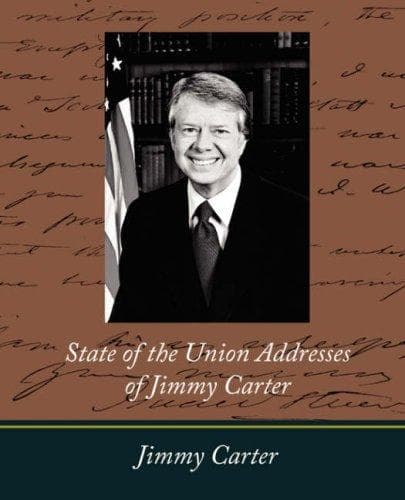
Presidents -- United States -- Messages; United States -- Politics and government -- Sources
These policies have been devised to deter, first and foremost, Soviet
aggression. As such they confront not only Soviet military forces but also
Soviet military doctrine. By definition deterrence requires that we shape
Soviet assessments about the risks of war, assessments they will make using
their doctrine, not ours.
But at the same time we in no way seek to emulate their doctrine. In
particular, nothing in our policy contemplates that nuclear warfare could
ever be a deliberate instrument for achieving our own goals of peace and
freedom. Moreover, our policies are carefully devised to provide the
greatest possible incentives and opportunities for future progress in arms
control.
Finally, our doctrinal evolution has been undertaken with appropriate
consultation with our NATO Allies and others. We are fully consistent with
NATO's strategy of flexible response.
FORCES FOR NATO
We are greatly accelerating our ability to reinforce Western Europe with
massive ground and air forces in a crisis. We are undertaking a major
modernization program for the Army's weapons and equipment, adding armor,
firepower, and tactical mobility.
We are prepositioning more heavy equipment in Europe to help us cope with
attacks with little warning, and greatly strengthening our airlift and
sealift capabilities.
We are also improving our tactical air forces, buying about 1700 new
fighter and attack aircraft over the next five years, and increasing the
number of Air Force fighter wings by over 10 percent.
We are working closely with our European allies to secure the Host Nation
Support necessary to enable us to deploy more quickly a greater ratio of
combat forces to the European theater at a lower cost to the United
States.
SECURITY ASSISTANCE
As we move to enhance U.S. defense capabilities, we must not lose sight of
the need to assist others in maintaining their own security and
independence. Events since World War II, most recently in Southwest Asia,
have amply demonstrated that U.S. security cannot exist in a vacuum, and
that our own prospects for peace are closely tied to those of our friends.
The security assistance programs which I am proposing for the coming fiscal
year thus directly promote vital U.S. foreign policy and national security
aims, and are integral parts of our efforts to improve and upgrade our own
military forces.
Public-domain text, read in full here on John Shaqi.
Reviews
Reviews
No reviews yet
Be the first to share your thoughts on this work.
Elsewhere in the archive
Join the Discussion
Join the discussion
Sign in to leave a comment or review.
Sign InorCreate an account