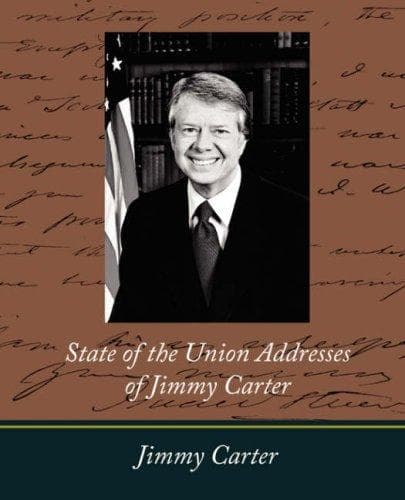
Presidents -- United States -- Messages; United States -- Politics and government -- Sources
Soviet-supported Vietnamese aggression in Indo-china has posed a major
challenge to regional stability. In response, we have reiterated our
security commitment to Thailand and have provided emergency security
assistance for Thai forces facing a Vietnamese military threat along the
Thai-Cambodian border. We have worked closely with ASEAN and the U.N. to
press for withdrawal of Vietnamese forces from Cambodia and to encourage a
political settlement in Cambodia which permits that nation to be governed
by leaders of its own choice. We still look forward to the day when
Cambodia peacefully can begin the process of rebuilding its social,
economic and political institutions, after years of devastation and
occupation. And, on humanitarian grounds and in support of our friends in
the region, we have worked vigorously with international organizations to
arrange relief and resettlement for the exodus of Indo-chinese refugees
which threatened to overwhelm these nations.
We have maintained our alliance with Korea and helped assure Korea's
security during a difficult period of political transition.
We have amended our military base agreement with the Philippines, ensuring
stable access to these bases through 1991. The importance of our Philippine
bases to the strategic flexibility of U.S. forces and our access to the
Indian Ocean is self-evident.
Finally, we are in the process of concluding a long negotiation
establishing Micronesia's status as a freely associated state.
We enter the 1980's with a firm strategic footing in East Asia and the
Pacific, based on stable and productive U.S. relations with the majority of
countries of the region. We have established a stable level of U.S.
involvement in the region, appropriate to our own interests and to the
interests of our friends and allies there.
THE MIDDLE EAST AND SOUTHWEST ASIA
The continuing Soviet occupation of Afghanistan and the dislocations caused
by the Iraq-Iran war serve as constant reminders of the critical importance
for us, and our allies, of a third strategic zone stretching across the
Middle East, the Persian Gulf, and much of the Indian subcontinent. This
Southwest Asian region has served as a key strategic and commercial link
between East and West over the centuries. Today it produces two-thirds of
the world's oil exports, providing most of the energy needs of our European
allies and Japan. It has experienced almost continuous conflict between
nations, internal instabilities in many countries, and regional rivalries,
combined with very rapid economic and social change. And now the Soviet
Union remains in occupation of one of these nations, ignoring world opinion
which has called on it to get out.
We have taken several measures to meet these challenges.
MIDDLE EAST
Public-domain text, read in full here on John Shaqi.
Reviews
Reviews
No reviews yet
Be the first to share your thoughts on this work.
Elsewhere in the archive
Join the Discussion
Join the discussion
Sign in to leave a comment or review.
Sign InorCreate an account