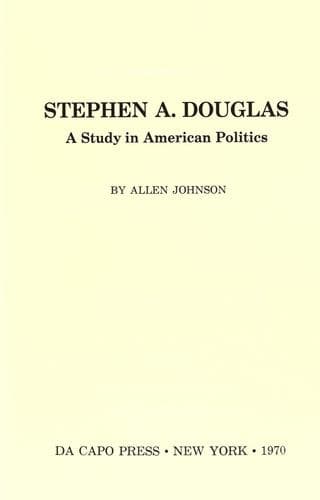
Stephen A. Douglas: A Study in American PoliticsJohnson, Allen
History
Stephen A. Douglas: A Study in American Politics
Johnson, Allen
Douglas, Stephen A. (Stephen Arnold), 1813-1861
Douglas kept himself well in hand throughout his speech. His manner
was at times defiant, but his language was restrained. At no time did
he disclose the pain which his rupture with the administration cost
him, except in his closing words. What he had to expect from the
friends of the administration was immediately manifest. Senator Bigler
of Pennsylvania sprang to the defense of the President. In an
irritating tone he intimated that Douglas himself had changed his
position on the question of submission, alluding to certain private
conferences at Douglas's house; but as though bound by a pledge of
secrecy, Bigler refrained from making the charge in so many words.
Douglas, thoroughly aroused, at once absolved, him from any pledges,
and demanded to know when they had agreed not to submit the
constitution to the people. The reply of Bigler was still allusive and
evasive. "Does he mean to say," insisted Douglas excitedly, "that I
ever was, privately or publicly, in my own house or any other, in
favor of a constitution without its being submitted to the people?" "I
have made no such allegation," was the reply. "You have allowed it to
be inferred," exclaimed Douglas in exasperated tones.[640] And then
Green reminded him, that in his famous report of January 4, 1854, he
had proposed to leave the slavery question to the decision of the
people "by their appropriate representatives chosen by them for that
purpose," with no suggestion of a second, popular vote. Truly, his
most insidious foes were now those of his own political household.
Anti-slavery men welcomed this revolt of Douglas without crediting him
with any but self-seeking motives. They could not bring themselves to
believe other than ill of the man who had advocated the repeal of the
Missouri Compromise. Republicans accepted his aid in their struggle
against the Lecompton fraud, but for the most part continued to regard
him with distrust. Indeed, Douglas made no effort to placate them. He
professed to care nothing for the cause of the slave which was nearest
their hearts. Hostile critics, then, were quick to point out the
probable motives from which he acted. His senatorial term was drawing
to a close. He was of course desirous of a re-election. But his
nominee for governor had been defeated at the last election, and the
State had been only with difficulty carried for the national
candidates of the party. The lesson was plain: the people of Illinois
did not approve the Kansas policy of Senator Douglas. Hence the
weathercock obeyed the wind.
Public-domain text, read in full here on John Shaqi.
Reviews
Reviews
No reviews yet
Be the first to share your thoughts on this work.
Elsewhere in the archive
Join the Discussion
Join the discussion
Sign in to leave a comment or review.
Sign InorCreate an account