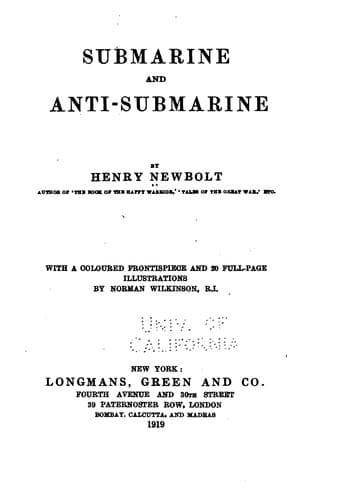
Submarine and Anti-submarineNewbolt, Henry John, Sir
History
Submarine and Anti-submarine
Newbolt, Henry John, Sir
Submarines (Ships); World War, 1914-1918 -- Naval operations -- Submarine
‘At 20 metres (65 feet) there are two sharp explosions, and the
boat trembles. The “poor shipwrecked men” have thrown depth-charges
after us. A few of the lights go out, and further damage to the
main switchboard is averted by timely action. The conning-tower is
filling. In theory the boat can still remain afloat, but no one has
yet survived to tell us how. The increasing weight causes the boat
to sink to 40 metres (131 feet) in spite of her being down by the
stern and with the engines at utmost speed. Water spurts through
the leaky places, and, owing to short circuits, half the lights
and important machinery break down successively--gyro compass,
main rudder, forward hydroplane (which, to make matters worse,
jams at ‘hard down’), trimming pumps, and all control apparatus.
The tricolour captured from the full-rigged ship _La Bayonne_ is
pressed into service to plug the leak. The boat must be lightened
by compressed air in the after and amidship diving tanks, and
brought on to an even keel. She rises, certainly, but is more down
by the stern than ever. The after compressed air service breaks
down. We must avoid coming to the surface, whatever happens, for up
above the enemy is lying in wait to fire at us. At 20 metres (65
feet) the diving-tank valves are opened, and all available men sent
forward, in order that their weight may cause the bow to sink. The
boat sinks by the bow, and the manœuvre is repeated. In another
twenty minutes it becomes impossible to proceed submerged. There
is now only one, not very promising, alternative--to come to the
surface suddenly and run away, firing as we go.
‘“Compressed air in all the tanks, open galley ventilator, man the
guns, Diesel engines ready, and put to utmost speed as soon as
possible.”
Public-domain text, read in full here on John Shaqi.
Reviews
Reviews
No reviews yet
Be the first to share your thoughts on this work.
Elsewhere in the archive
Join the Discussion
Join the discussion
Sign in to leave a comment or review.
Sign InorCreate an account