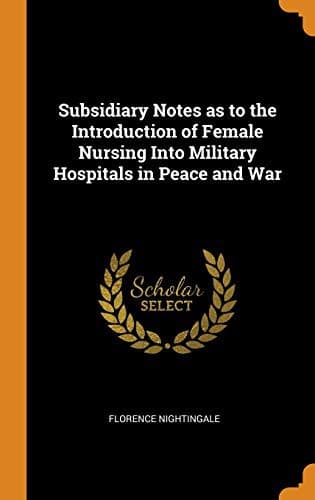
Subsidiary Notes as to the Introduction of Female Nursing into Military Hospitals in Peace and WarNightingale, Florence
History
Subsidiary Notes as to the Introduction of Female Nursing into Military Hospitals in Peace and War
Nightingale, Florence
Military hospitals -- Great Britain; Nurses -- Great Britain
It would have been more to the purpose had he produced his requisitions
for food, clothing, comforts, &c., and shown how they were refused or
not complied with. At the very time I gave over part of our own private
stores of port wine, &c., to the French Hospitals (for part only of
what was given were Government stores at all), Sir John Hall might have
obtained, out of the large wine store at Balaklava, any amount of wine
he required, by merely asking for it. The simple statement of this fact
would have been a better answer to M. Baudens[20] than assuming that I
could obtain from Government stores and wine for the French Hospitals
which he could not obtain for his own.
As to his statement about the Nurses, it simply shows ignorance of the
whole matter. Nobody ever contemplated giving to a Nurse the entire
charge of a number of sick in a Military General Hospital. It is no
part of good Hospital nursing to do so. With proper Orderlies, a Nurse
can very well attend to sixty or seventy sick. We were prevented,
indeed, by the authorities, and by circumstances, from organizing a
proper system of nursing, and were obliged to do all the good possible
in the best possible way. But Sir John Hall’s method of estimating the
efficiency of nursing, by dividing the number of sick by the number of
Nurses, is simply absurd.
FOOTNOTES:
[2] As little reference as possible, no reference at all, if it can
be avoided, should be made, on our part, to the Confidential Report,
which, in 1855, was presented against the War-Nurses. The less scandal
about women is reverted to the better--a truth all slanderers have
always appreciated: “Calomniez, calomniez toujours: il en reste
toujours quelque chose.” It would be far preferable if Nurses could
enter the Army Hospitals quietly, and let by-gones be by-gones (the
useful experience always excepted, which has been gained).
[3] The work was done under many difficulties, some inevitable, some
which should have been spared. Things happened among us deeply to be
regretted. Rebellion among some ladies and some nuns, and drunkenness
among some nurses unhappily disgraced our body; minor faults justified
_pro tanto_ the common opinion that the vanity, the gossip, and the
insubordination (which none more despise than those who trade upon
them) of women make them unfit for, and mischievous in the Service,
however materially useful they may be in it. Of all this, the material
consequences might have been spared by some such “General Order” as
the above, which, at least, prevents others from taking advantage and
making capital of such faults.
Public-domain text, read in full here on John Shaqi.
Reviews
Reviews
No reviews yet
Be the first to share your thoughts on this work.
Elsewhere in the archive
Join the Discussion
Join the discussion
Sign in to leave a comment or review.
Sign InorCreate an account