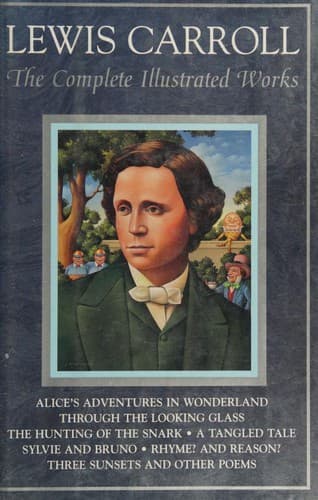
Sylvie and Bruno Concluded (Illustrated)Carroll, Lewis
Science
Sylvie and Bruno Concluded (Illustrated)
Carroll, Lewis
Fantasy fiction
Sylvie looked round at me, with tears in her eyes. I tried to give her
an encouraging smile, but it was evidently a great strain on the nerves
of a child so wholly unused to be made an exhibition of, and she was
frightened and unhappy. Yet here came out the perfect sweetness of her
disposition: I could see that she was resolved to forget herself, and do
her best to give pleasure to Lady Muriel and her friends. She seated
herself at the instrument, and began instantly. Time and expression, so
far as one could judge, were perfect: but her touch was one of such
extraordinary lightness that it was at first scarcely possible, through
the hum of conversation which still continued, to catch a note of what
she was playing.
But in a minute the hum had died away into absolute silence, and we all
sat, entranced and breathless, to listen to such heavenly music as none
then present could ever forget.
Hardly touching the notes at first, she played a sort of introduction in
a minor key—like an embodied twilight; one felt as though the lights
were growing dim, and a mist were creeping through the room. Then there
flashed through the gathering gloom the first few notes of a melody so
lovely, so delicate, that one held one’s breath, fearful to lose a
single note of it. Ever and again the music dropped into the pathetic
minor key with which it had begun, and, each time that the melody forced
its way, so to speak, through the enshrouding gloom into the light of
day, it was more entrancing, more magically sweet. Under the airy touch
of the child, the instrument actually seemed to _warble_, like a bird.
“_Rise up, my love, my fair one_,” it seemed to sing, “_and come away!
For lo, the winter is past, the rain is over and gone; the flowers
appear on the earth; the time of the singing of birds is come!_” One
could fancy one heard the tinkle of the last few drops, shaken from the
trees by a passing gust—that one saw the first glittering rays of the
sun, breaking through the clouds.
The Count hurried across the room in great excitement. “I _cannot_
remember myself,” he exclaimed, “of the name of this so charming an air!
It is of an opera, most surely. Yet not even will the _opera_ remind his
name to me! What you call him, dear child?”
[Illustration: ‘HOW CALL YOU THE OPERA?’]
Sylvie looked round at him with a rapt expression of face. She had
ceased playing, but her fingers still wandered fitfully over the keys.
All fear and shyness had quite passed away now, and nothing remained but
the pure joy of the music that had thrilled our hearts.
“The title of it!” the Count repeated impatiently. “How call you the
opera?”
“I don’t know what an opera _is_,” Sylvie half-whispered.
“How, then, call you the _air_?”
“I don’t know any name for it,” Sylvie replied, as she rose from the
instrument.
Public-domain text, read in full here on John Shaqi.
Reviews
Reviews
No reviews yet
Be the first to share your thoughts on this work.
Elsewhere in the archive
Join the Discussion
Join the discussion
Sign in to leave a comment or review.
Sign InorCreate an account