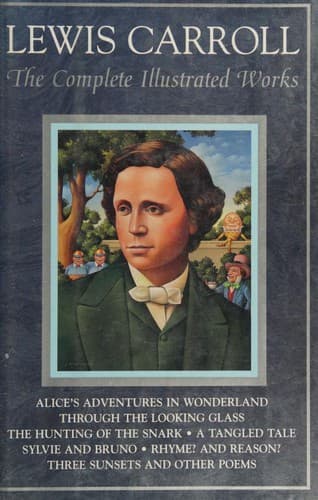
Sylvie and Bruno Concluded (Illustrated)Carroll, Lewis
Science
Sylvie and Bruno Concluded (Illustrated)
Carroll, Lewis
Fantasy fiction
An uncomfortable silence followed this announcement. Lady Muriel
ventured no further conjectures, but quietly examined the fastenings of
the windows, which opened as doors. They all proved to be well fastened,
_inside_.
Not yet at the end of her resources, Lady Muriel rang the bell. “Ask the
housekeeper to step here,” she said, “and to bring the children’s
walking-things with her.”
“I’ve brought them, my Lady,” said the obsequious housekeeper, entering
after another minute of silence. “I thought the young lady would have
come to my room to put on her boots. Here’s your boots, my love!” she
added cheerfully, looking in all directions for the children. There was
no answer, and she turned to Lady Muriel with a puzzled smile. “Have the
little darlings hid themselves?”
“I don’t see them, just now,” Lady Muriel replied, rather evasively.
“You can leave their things here, Wilson. _I’ll_ dress them, when
they’re ready to go.”
The two little hats, and Sylvie’s walking-jacket, were handed round
among the ladies, with many exclamations of delight. There certainly was
a sort of witchery of beauty about them. Even the little boots did not
miss their share of favorable criticism. “Such natty little things!” the
musical young lady exclaimed, almost fondling them as she spoke. “And
what tiny tiny feet they must have!”
Finally, the things were piled together on the centre-ottoman, and the
guests, despairing of seeing the children again, began to wish
good-night and leave the house.
There were only some eight or nine left—to whom the Count was
explaining, for the twentieth time, how he had had his eye on the
children during the last verse of the song; how he had then glanced
round the room, to see what effect “de great chest-note” had had upon
his audience; and how, when he looked back again, they had both
disappeared—when exclamations of dismay began to be heard on all sides,
the Count hastily bringing his story to an end to join in the outcry.
The walking-things had all disappeared!
After the utter failure of the search for the _children_, there was a
very half-hearted search made for their _apparel_. The remaining guests
seemed only too glad to get away, leaving only the Count and our four
selves.
The Count sank into an easy-chair, and panted a little.
“Who then _are_ these dear children, I pray you?” he said. “Why come
they, why go they, in this so little ordinary a fashion? That the music
should make itself to vanish—that the hats, the boots, should make
themselves to vanish—how is it, I pray you?”
“I’ve no idea where they are!” was all I could say, on finding myself
appealed to, by general consent, for an explanation.
The Count seemed about to ask further questions, but checked himself.
“The hour makes himself to become late,” he said. “I wish to you a very
good night, my Lady. I betake myself to my bed—to dream—if that indeed I
be not dreaming now!” And he hastily left the room.
Public-domain text, read in full here on John Shaqi.
Reviews
Reviews
No reviews yet
Be the first to share your thoughts on this work.
Elsewhere in the archive
Join the Discussion
Join the discussion
Sign in to leave a comment or review.
Sign InorCreate an account