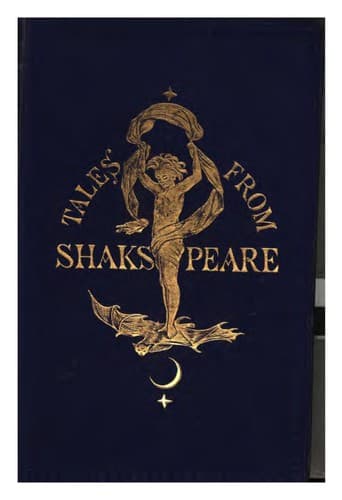
Shakespeare, William, 1564-1616 -- Adaptations; Shakespeare, William, 1564-1616 -- Stories, plots, etc. -- Juvenile literature
“My good Cesario, when I heard that song last night, methought it
did relieve my passion much. Mark it, Cesario, it is old and
plain. The spinsters and the knitters when they sit in the sun,
and the young maids that weave their thread with bone, chant this
song. It is silly, yet I love it, for it tells of the innocence
of love in the old times.”
SONG
Come away, come away, Death,
And in sad cypress let me be laid;
Fly away, fly away, breath,
I am slain by a fair cruel maid.
My shroud of white stuck all with yew, O prepare it!
My part of death no one so true did share it.
Not a flower, not a flower sweet,
On my black coffin let there be strewn:
Not a friend, not a friend greet
My poor corpse, where my bones shall be thrown.
A thousand thousand sighs to save, lay me O where
Sad true lover never find my grave, to weep there!
Viola did not fail to mark the words of the old song, which in
such true simplicity described the pangs of unrequited love, and
she bore testimony in her countenance of feeling what the song
expressed. Her sad looks were observed by Orsino, who said to
her:
“My life upon it, Cesario, though you are so young, your eye has
looked upon some face that it loves. Has it not, boy?”
“A little, with your leave,” replied Viola.
“And what kind of woman, and of what age is she?” said Orsino.
“Of your age and of your complexion, my lord,” said Viola; which
made the duke smile to hear this fair young boy loved a woman so
much older than himself and of a man’s dark complexion; but Viola
secretly meant Orsino, and not a woman like him.
When Viola made her second visit to Olivia she found no
difficulty in gaining access to her. Servants soon discover when
their ladies delight to converse with handsome young messengers;
and the instant Viola arrived the gates were thrown wide open,
and the duke’s page was shown into Olivia’s apartment with great
respect. And when Viola told Olivia that she was come once more
to plead in her lord’s behalf, this lady said:
“I desired you never to speak of him again; but if you would
undertake another suit, I had rather hear you solicit, than music
from the spheres.”
This was pretty plain speaking, but Olivia soon explained herself
still more plainly, and openly confessed her love; and when she
saw displeasure with perplexity expressed in Viola’s face, she
said: “Oh, what a deal of scorn looks beautiful in the contempt
and anger of his lip! Cesario, by the roses of the spring, by
maidhood, honor, and by truth, I love you so that, in spite of
your pride, I have neither wit nor reason to conceal my passion.”
But in vain the lady wooed. Viola hastened from her presence,
threatening never more to come to plead Orsino’s love; and all
the reply she made to Olivia’s fond solicitation was, a
declaration of a resolution NEVER TO LOVE ANY WOMAN.
Public-domain text, read in full here on John Shaqi.
Reviews
Reviews
No reviews yet
Be the first to share your thoughts on this work.
Elsewhere in the archive
Join the Discussion
Join the discussion
Sign in to leave a comment or review.
Sign InorCreate an account