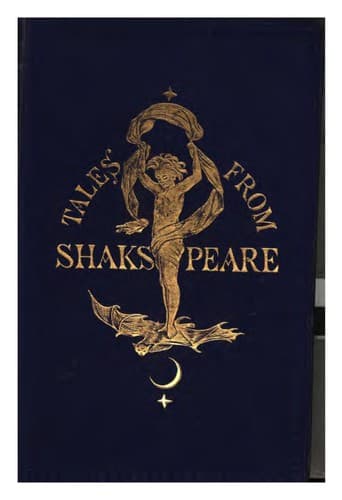
Shakespeare, William, 1564-1616 -- Adaptations; Shakespeare, William, 1564-1616 -- Stories, plots, etc. -- Juvenile literature
Here on a day, when he was digging for roots, his poor sustenance, his
spade struck against something heavy, which proved to be gold, a great
heap which some miser had probably buried in a time of alarm, thinking
to have come again, and taken it from its prison, but died before the
opportunity had arrived, without making any man privy to the
concealment; so it lay, doing neither good nor harm, in the bowels of
the earth, its mother, as if it had never come from thence, till the
accidental striking of Timon's spade against it once more brought it to
light.
Here was a mass of treasure which, if Timon had retained his old mind,
was enough to have purchased him friends and flatterers again; but Timon
was sick of the false world, and the sight of gold was poisonous to his
eyes; and he would have restored it to the earth, but that, thinking of
the infinite calamities which by means of gold happen to mankind, how
the lucre of it causes robberies, oppression, injustice, briberies,
violence, and murder, among men, he had a pleasure in imagining (such a
rooted hatred did he bear to his species) that out of this heap, which
in digging he had discovered, might arise some mischief to plague
mankind. And some soldiers passing through the woods near to his cave at
that instant, which proved to be a part of the troops of the Athenian
captain Alcibiades, who upon some disgust taken against the senators of
Athens (the Athenians were ever noted to be a thankless and ungrateful
people, giving disgust to their generals and best friends), was marching
at the head of the same triumphant army which he had formerly headed in
their defence, to war against them; Timon, who liked their business
well, bestowed upon their captain the gold to pay his soldiers,
requiring no other service from him, than that he should with his
conquering army lay Athens level with the ground, and burn, slay, kill
all her inhabitants; not sparing the old men for their white beards, for
(he said) they were usurers, nor the young children for their seeming
innocent smiles, for those (he said) would live, if they grew up, to be
traitors; but to steel his eyes and ears against any sights or sounds
that might awaken compassion; and not to let the cries of virgins,
babes, or mothers, hinder him from making one universal massacre of the
city, but to confound them all in his conquest; and when he had
conquered, he prayed that the gods would confound him also, the
conqueror: so thoroughly did Timon hate Athens, Athenians, and all
mankind.
Public-domain text, read in full here on John Shaqi.
Reviews
Reviews
No reviews yet
Be the first to share your thoughts on this work.
Elsewhere in the archive
Join the Discussion
Join the discussion
Sign in to leave a comment or review.
Sign InorCreate an account