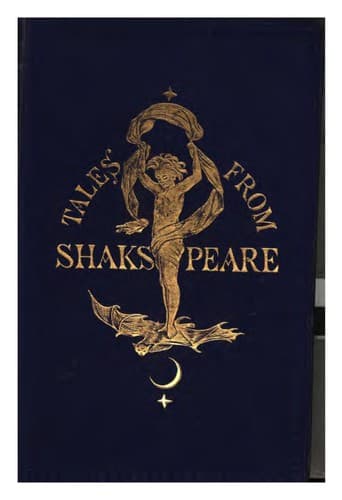
Shakespeare, William, 1564-1616 -- Adaptations; Shakespeare, William, 1564-1616 -- Stories, plots, etc. -- Juvenile literature
How the judgment of Heaven overtook the bad Earl of Gloucester, whose
treasons were discovered, and himself slain in single combat with his
brother, the lawful earl; and how Goneril's husband, the Duke of Albany,
who was innocent of the death of Cordelia, and had never encouraged his
lady in her wicked proceedings against her father, ascended the throne
of Britain after the death of Lear, is needless here to narrate; Lear
and his Three Daughters being dead, whose adventures alone concern our
story.
[Illustration]
[Illustration]
MACBETH
When Duncan the Meek reigned King of Scotland, there lived a great
thane, or lord, called Macbeth. This Macbeth was a near kinsman to the
king, and in great esteem at court for his valour and conduct in the
wars; an example of which he had lately given, in defeating a rebel army
assisted by the troops of Norway in terrible numbers.
[Illustration: THEY WERE STOPPED BY THE STRANGE APPEARANCE OF THREE
FIGURES]
The two Scottish generals, Macbeth and Banquo, returning victorious from
this great battle, their way lay over a blasted heath, where they were
stopped by the strange appearance of three figures like women, except
that they had beards, and their withered skins and wild attire made them
look not like any earthly creatures. Macbeth first addressed them, when
they, seemingly offended, laid each one her choppy finger upon her
skinny lips, in token of silence; and the first of them saluted Macbeth
with the title of thane of Glamis. The general was not a little startled
to find himself known by such creatures; but how much more, when the
second of them followed up that salute by giving him the title of thane
of Cawdor, to which honour he had no pretensions; and again the third
bid him "All hail! king that shalt be hereafter!" Such a prophetic
greeting might well amaze him, who knew that while the king's sons
lived he could not hope to succeed to the throne. Then turning to
Banquo, they pronounced him, in a sort of riddling terms, to be _lesser
than Macbeth and greater_! _not so happy, but much happier_! and
prophesied that though he should never reign, yet his sons after him
should be kings in Scotland. They then turned into air, and vanished: by
which the generals knew them to be the weird sisters, or witches.
While they stood pondering on the strangeness of this adventure, there
arrived certain messengers from the king, who were empowered by him to
confer upon Macbeth the dignity of thane of Cawdor: an event so
miraculously corresponding with the prediction of the witches astonished
Macbeth, and he stood wrapped in amazement, unable to make reply to the
messengers; and in that point of time swelling hopes arose in his mind
that the prediction of the third witch might in like manner have its
accomplishment, and that he should one day reign king in Scotland.
Public-domain text, read in full here on John Shaqi.
Reviews
Reviews
No reviews yet
Be the first to share your thoughts on this work.
Elsewhere in the archive
Join the Discussion
Join the discussion
Sign in to leave a comment or review.
Sign InorCreate an account