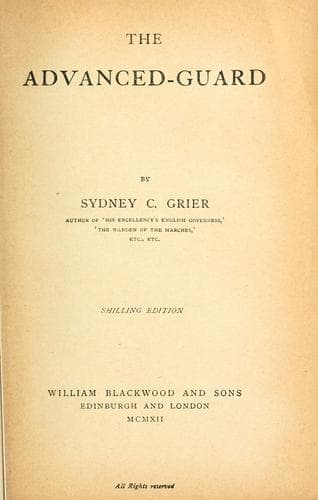
British -- Asia -- Fiction; Man-woman relationships -- Fiction; Soldiers -- Fiction
Instead of appearing in the gardens that evening, Major Keeling rode
out, accompanied only by an orderly, to Sheikhgarh. He had never met
the Sheikh-ul-Jabal face to face since the day of the eclipse and of
his triumphant vindication, but important pieces of information had
come to him several times by strange messengers, testifying to the
friendliness of the recluse. Curious to relate, the destruction of the
marvellous legend which had grown up about the supposed identity of
the two men seemed to have had little or no effect. The dwellers on
the border and the tribesmen alike possessed a strong love of the
miraculous, and resented the attempt to deprive them of a wonder.
Taking refuge in the fact that only a very few people, and most of
those Europeans, had seen Major Keeling and the Sheikh side by side,
they maintained with obstinate pertinacity their original theory that
the one man led a double existence--as British commandant by day and
head of the Brotherhood of the Mountains by night. From this belief
nothing could move them, and as the result tended to the peace of the
border, their rulers had left off trying to convince them against
their will. It is to be feared that Ismail Bakhsh, the orderly,
foresaw a large increase of credit to himself from this journey, by
the unconcealed joy with which he entered upon it; and yet, marvellous
as were the tales he told on his return, his experiences were confined
to remaining with his horse at the point where visitors to the
fortress were first challenged. To Major Keeling’s astonishment, no
attempt was made to blindfold him on this occasion, the guards saying
that they had orders from the Sheikh to admit Kīlin Sahib freely
whenever he might come, and he rode with them to the gate of the
fortress, noticing the care with which the place was defended. This
time the Sheikh came to meet him at the entrance, and taking him up to
the room over the gateway, possibly from fear of eavesdroppers in the
great hall, sent away all his attendants as soon as the proper
salutations had passed. He seemed anxious, and was evidently expecting
news of importance.
“There is no message from Nalapur--no outbreak?” he asked eagerly, as
soon as they were alone.
“I have heard nothing,” answered Major Keeling in surprise. “What news
should there be?”
“It is well. Yet there must be news soon. The Amir and Gobind Chand
are, as it were, crossing a gulf by a rope-bridge--one false step
means destruction. But they will not return to firm ground.”
“But you sent me word that the Sardars refused to stand their
exactions and oppression any longer, and that they had been obliged to
promise to meet them, and inquire into their grievances.”
“True, and the assembly is to meet this week; but what will follow?
Are Wilayat Ali and the Vizier men who will render back the gains they
have extorted? Not so; they will divert the minds of the Sardars by
making war upon one of their neighbours. And which neighbour will that
be?”
Public-domain text, read in full here on John Shaqi.
Reviews
Reviews
No reviews yet
Be the first to share your thoughts on this work.
Elsewhere in the archive
Join the Discussion
Join the discussion
Sign in to leave a comment or review.
Sign InorCreate an account