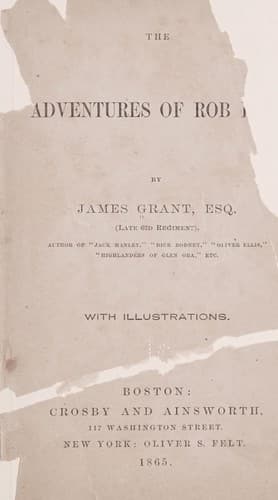
Biographical fiction; Historical fiction; Outlaws -- Fiction; Rob Roy, 1671-1734 -- Fiction; Scotland -- History -- 1689-1745 -- Fiction
"And what then?" asked Morrar, with a fierce and mocking laugh.
"In all thy vast possessions, who shall mourn thee?"
"The greyhounds in my hall, and the birds of prey, for whom I have
prepared many a banquet: yea, the black wolf and the yellow-footed
eagle too shall mourn for Morrar na Shean. Priest, I have come to
punish your insolence. Seize and drag him forth, Thorolf Starkadder!"
In a moment the mailed hands of Thorolf were wreathed in the white
hair and reverend beard of the old bishop, who was roughly dragged
through his own gate, and beaten to the earth beneath a shower of
blows dealt by clenched hands and the heavy iron hilts of swords and
daggers. Breathlessly, and on his knees, he implored mercy,
beseeching them not to peril their souls by murder, and a sin so foul
as sacrilege, by imbruing their hands in the blood of a priest; but
the fury of cruelty and destruction was in their hearts. Thorolf,
with his dagger, destroyed the eyesight of the poor old man; and John
of Harpidale cut out his tongue.
Then procuring the large cauldron in which food was usually prepared
for the staghounds of Morrar, they actually cast the blind and
bleeding bishop into it, and boiled him alive.*
* The scene of this terrible outrage is still shown near the Manse of
Halkirk.
On hearing of these proceedings, the Countess Grunhilda fled in
horror to the cathedral of Kirkwall, and took refuge with William
Bishop of Orkney, with whom she resided for several years, while her
daughters, under other names than their own, were growing up to
womanhood at the court of Queen Ermengarde, and while her husband,
the Lord of the Venison, spent his days in hunting and his nights in
drinking, carousing, fighting, and outrage, with his inseparable
ruffians, John of Harpidale and Thorolf Starkadder.
It was long before King William, who resided at the palace of Scone,
heard the correct details of these outrages, and then his soul was
filled with sorrow and indignation, for he was a gentle, wise, and
valiant king.
He resolved to punish the wicked Earl of Caithness, and for this
purpose two earls, named Roland and Gillechrist, were sent against
him with a body of troops.
Roland was the son of Uchtred, a brave lord of Galloway, who had
recently defeated the King of England at Carlisle, when preparing to
invade his province; and he had become the husband of Algiva, the
eldest daughter of Morrar na Shean.
Gillechrist had wedded Erica, the second daughter. He was Earl of
Angus, and from this marriage are descended the clan and surname of
Ogilvie. By a singular coincidence these two peers were now marching
against their father-in-law, with orders to subject him to the same
death as that by which the unhappy bishop died.
Public-domain text, read in full here on John Shaqi.
Reviews
Reviews
No reviews yet
Be the first to share your thoughts on this work.
Elsewhere in the archive
Join the Discussion
Join the discussion
Sign in to leave a comment or review.
Sign InorCreate an account