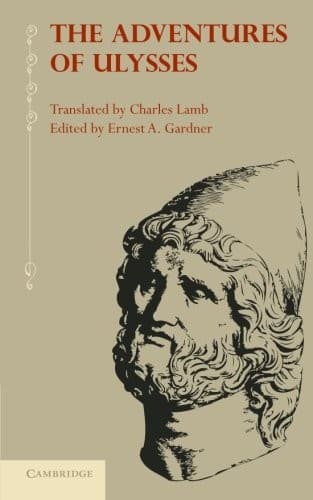
Homer. Odyssey -- Adaptations; Odysseus, King of Ithaca (Mythological character) -- Juvenile literature
Nor did that dreadful pair desist till they had
laid all their foes at their feet. At their feet they lay in shoals: like
fishes, when the fishermen break up their nets, so they lay gasping and
sprawling at the feet of Ulysses and his son. And Ulysses remembered the
prediction of Tiresias, which said that he was to perish by his own
guests, unless he slew those who knew him not.
[Illustration: _Rose in a mass to overwhelm and crush those two_.]
Then certain of the queen's household went up and told Penelope what had
happened, and how her lord Ulysses was come home, and had slain the
suitors. But she gave no heed to their words, but thought that some frenzy
possessed them, or that they mocked her; for it is the property of such
extremes of sorrow as she had felt not to believe when any great joy
cometh. And she rated and chid them exceedingly for troubling her. But
they the more persisted in their asseverations of the truth of what they
had affirmed; and some of them had seen the slaughtered bodies of the
suitors dragged forth of the hall. And they said, "That poor guest whom
you talked with last night was Ulysses." Then she was yet more fully
persuaded that they mocked her, and she wept. But they said, "This thing
is true which we have told. We sat within, in an inner room in the palace,
and the doors of the hall were shut on us, but we heard the cries and the
groans of the men that were killed, but saw nothing, till at length your
son called to us to come in, and entering we saw Ulysses standing in the
midst of the slaughtered." But she, persisting in her unbelief, said that
it was some god which had deceived them to think it was the person of
Ulysses.
By this time Telemachus and his father had cleansed their hands from the
slaughter, and were come to where the queen was talking with those of her
household; and when she saw Ulysses, she stood motionless, and had no
power to speak, sudden surprise and joy and fear and many passions so
strove within her. Sometimes she was clear that it was her husband that
she saw, and sometimes the alteration which twenty years had made in his
person (yet that was not much) perplexed her that she knew not what to
think, and for joy she could not believe, and yet for joy she would not
but believe; and, above all, that sudden change from a beggar to a king
troubled her, and wrought uneasy scruples in her mind. But Telemachus,
seeing her strangeness, blamed her, and called her an ungentle and
tyrannous mother; and said that she showed a too great curiousness of
modesty, to abstain from embracing his father, and to have doubts of his
person, when to all present it was evident that he was the very real and
true Ulysses.
Public-domain text, read in full here on John Shaqi.
Reviews
Reviews
No reviews yet
Be the first to share your thoughts on this work.
Elsewhere in the archive
Join the Discussion
Join the discussion
Sign in to leave a comment or review.
Sign InorCreate an account