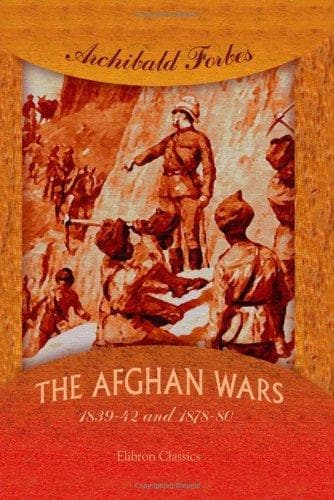
The Afghan Wars 1839-42 and 1878-80Forbes, Archibald
History
The Afghan Wars 1839-42 and 1878-80
Forbes, Archibald
Afghan Wars
Our relations with the Ameer during the earlier part of his residence in
the British camp were not a little peculiar. Nominally he was our guest,
and a certain freedom was accorded to him and his retinue. There was no
doubt that the Sirdars of the Ameer's suite grossly abused their
privileges. Whether with Yakoub Khan's cognisance or not, they
authorised the use of his name by the insurgent leaders. Nek Mahomed,
the insurgent commander at Charasiah, was actually in the tents of the
Ameer on the evening before the fight. To all appearance our operations
continued to have for their ultimate object the restoration of Yakoub
Khan to his throne. Our administrative measures were carried on in his
name. The hostile Afghans we designated as rebels against his rule; and
his authority was proclaimed as the justification of much of our
conduct. But the situation gradually became intolerable to Yakoub Khan.
He was a guest in the British camp, but he was also in a species of
custody. Should our arms reinstate him, he could not hope to hold his
throne. His harassed perplexity came to a crisis on the morning of the
12th October, the day of General Roberts' durbar in the Balla Hissar,
which he had been desired to attend. What he specifically apprehended is
unknown; what he did was to tell General Roberts, with great excitement,
that he would not go to the durbar, that his life was too miserable for
long endurance, that he would rather be a grass-cutter in the British
camp than remain Ameer of Afghanistan. He was firmly resolved to resign
the throne, and begged that he might be allowed to do so at once.
General Roberts explained that the acceptance of his resignation rested
not with him but with the Viceroy, pending whose decision matters, the
General desired, should remain as they were, affairs continuing to be
conducted in the Ameer's name as before. To this the Ameer consented;
his tents were moved to the vicinity of General Roberts' headquarters,
and a somewhat closer surveillance over him was maintained.
Secrecy meanwhile was preserved until the Viceroy's reply should arrive.
The nature of that reply was intimated by the proclamation which General
Roberts issued on the 28th October. It announced that the Ameer had of
his own free will abdicated his throne and left Afghanistan without a
government. 'The British Government,' the proclamation continued, 'now
commands that all Afghan authorities, chiefs, and sirdars, do continue
their functions in maintaining order.... The British Government, after
consultation with the principal sirdars, tribal chiefs, and others
representing the interests and wishes of the various provinces and
cities, will declare its will as to the future permanent arrangements to
be made for the good government of the people.'
Public-domain text, read in full here on John Shaqi.
Reviews
Reviews
No reviews yet
Be the first to share your thoughts on this work.
Elsewhere in the archive
Join the Discussion
Join the discussion
Sign in to leave a comment or review.
Sign InorCreate an account