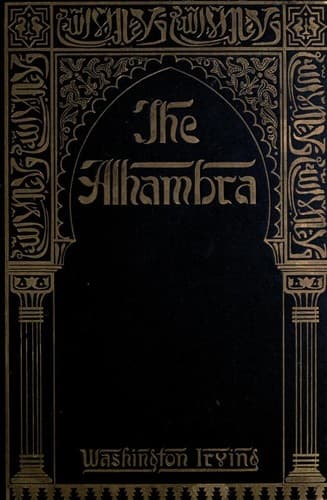
Verhalen over het gebouwencomplex in Granada, dat eigendom was van de laatste islamitische vorsten in Spanje.
Alhamar gained a melancholy distinction by his prowess in this renowned
conquest, but more true honor by the humanity which he prevailed upon
Ferdinand to introduce into the usages of war. When in 1248 the famous
city of Seville surrendered to the Castilian monarch, Alhamar returned
sad and full of care to his dominions. He saw the gathering ills that
menaced the Moslem cause; and uttered an ejaculation often used by him
in moments of anxiety and trouble,--“How straitened and wretched would
be our life, if our hope were not so spacious and extensive.” “Que
angoste y miserabile seria nuestra vida, sino fuera tan dilatada y
espaciosa nuestra esperanza!”
As he approached Granada on his return he beheld arches of triumph which
had been erected in honor of his martial exploits. The people thronged
forth to see him with impatient joy, for his benignant rule had won all
hearts. Wherever he passed he was hailed with acclamations as “El
Ghalib!” (the conqueror). Alhamar gave a melancholy shake of the head on
hearing the appellation. “_Wa le ghalib ile Aláh!_” (there is no
conqueror but God) exclaimed he. From that time forward this exclamation
became his motto, and the motto of his descendants, and appears to this
day emblazoned on his escutcheons in the halls of the Alhambra.
Alhamar had purchased peace by submission to the Christian yoke; but he
was conscious that, with elements so discordant and motives for
hostility so deep and ancient, it could not be permanent. Acting,
therefore, upon the old maxim, “Arm thyself in peace and clothe thyself
in summer,” he improved the present interval of tranquillity by
fortifying his dominions, replenishing his arsenals, and promoting those
useful arts which give wealth and real power. He confided the command of
his various cities to such as had distinguished themselves by valor and
prudence, and who seemed most acceptable to the people. He organized a
vigilant police, and established rigid rules for the administration of
justice. The poor and the distressed always found ready admission to his
presence, and he attended personally to their assistance and redress. He
erected hospitals for the blind, the aged, and infirm, and all those
incapable of labor, and visited them frequently; not on set days with
pomp and form, so as to give time for everything to be put in order, and
every abuse concealed, but suddenly, and unexpectedly, informing
himself, by actual observation and close inquiry, of the treatment of
the sick, and the conduct of those appointed to administer to their
relief. He founded schools and colleges, which he visited in the same
manner, inspecting personally the instruction of the youth. He
established butcheries and public ovens, that the people might be
furnished with wholesome provisions at just and regular prices. He
introduced abundant streams of water into the city, erecting baths and
fountains, and constructing aqueducts and canals to irrigate and
fertilize the Vega.
Public-domain text, read in full here on John Shaqi.
Reviews
Reviews
No reviews yet
Be the first to share your thoughts on this work.
Join the Discussion
Join the discussion
Sign in to leave a comment or review.
Sign InorCreate an account