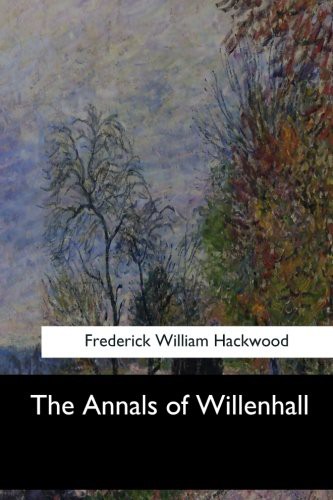
The Annals of WillenhallHackwood, Frederick William
History
The Annals of Willenhall
Hackwood, Frederick William
Willenhall (Walsall, England)
Inasmuch as Bentley Hall lies within the confines of Willenhall, this
place must always be associated with the rise and early history of
Wesleyanism. The episode of John Wesley being haled by the Wednesbury
rioters before Justice Lane at Bentley Hall (1743) belongs to the general
history of the denomination, and there is no need to repeat the story
here.
The reader may be referred to “The History of Methodism in the Wednesbury
Circuit,” by the Rev. W. J. Wilkinson, published by J. M. Price,
Darlaston, 1895; and for ampler detail to “Religious Wednesbury,” by the
present writer, 1900.
That the evangelical missioning of John Wesley was peculiarly suited to
the religious and social needs of the eighteenth century, and nowhere
more so than among the proletariat of the mining and manufacturing
Midlands, is now a generally accepted truism. There is no direct
evidence that the great evangelist himself ever preached in Willenhall,
but the appearance on the scene of some of the earliest Methodist
preachers may be taken for granted. For were not the prevailing sins of
cockfighting and bull-baiting, and all the other popular brutalities of
the period, to be combated in Willenhall as much as in Darlaston or
Wednesbury? And where the harvest was, were not the reapers always
forthcoming?
According to Mr. A. Camden Pratt, in his “Black Country Methodism,” the
earliest Methodist services were open-air meetings held round a big
boulder at the corner of Monmore Lane. Then the nucleus of a Willenhall
congregation was formed at a cottage in Ten House Row; outgrowing its
accommodation here, a removal was next made to a farmhouse with a
commodious kitchen at Hill End.
The leaders and preachers came from Darlaston, and it was not till 1830
that Willenhall was favoured with a resident “travelling preacher,” and
the provision of a Wesleyan Chapel—it was on the site of the present
Wesleyan Day Schools. The cause flourished and grew mightily; chapels
were established at Short Heath and Portobello, on the Walsall Road
(1865), and on Spring Bank.
Mr. Pratt pays a high tribute to the efforts of the Tildesleys and the
Harpers, but with a sense of justice he does not forget the mead of
gratitude always due to those early pioneers from Darlaston, placing on
the same bright scroll of fame the names of Foster, Wilkes, Rubery,
Silcock, Bowen, and Banks.
In the earlier history of local Wesleyanism, one of its chief supporters
was James Carpenter, founder of the existing firm of Carpenter and
Tildesley. Another pillar of Wesleyanism was Jonah Tildesley, followed
later in the good work by his two sons, Josiah and Jesse, his grandson
Thomas, George Ley Pearce, and Isaac Pedley; and in a lesser degree by
James Tildesley (who married Harriet Carpenter), and the late John
Harper, founder of the Albion Works, now the largest place of employment
in the town.
Public-domain text, read in full here on John Shaqi.
Reviews
Reviews
No reviews yet
Be the first to share your thoughts on this work.
Elsewhere in the archive
Join the Discussion
Join the discussion
Sign in to leave a comment or review.
Sign InorCreate an account