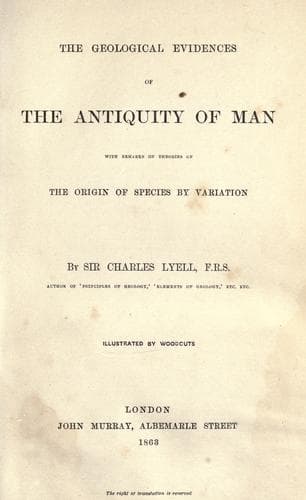
Evolution (Biology); Glacial epoch; Human beings -- Origin; Human evolution
Possibly, in the earlier geographical condition of this country, the
confluence of tributaries with the Somme afforded inducements to a
hunting and fishing tribe to settle there, and some of the same natural
advantages may have caused the first inhabitants of Amiens and Abbeville
to fix on the same sites for their dwellings. If the early hunting and
fishing tribes frequented the same spots for hundreds or thousands of
years in succession, the number of the stone implements lost in the
bed of the river need not surprise us. Ice-chisels, flint hatchets, and
spear-heads may have slipped accidentally through holes kept constantly
open, and the recovery of a lost treasure once sunk in the bed of the
ice-bound stream, inevitably swept away with gravel on the breaking up
of the ice in the spring, would be hopeless. During a long winter, in a
country affording abundance of flint, the manufacture of tools would be
continually in progress; and, if so, thousands of chips and flakes
would be purposely thrown into the ice-hole, besides a great number of
implements having flaws, or rejected as too unskilfully made to be worth
preserving.
As to the fossil fauna of the drift, considered in relation to the
climate, when, in 1859, I took a collection which I had made of all the
more common species of land and freshwater shells from the Amiens and
Abbeville drift, to my friend M. Deshayes at Paris, he declared them to
be, without exception, the same as those now living in the basin of the
Seine. This fact may seem at first sight to imply that the climate had
not altered since the flint tools were fabricated; but it appears that
all these species of molluscs now range as far north as Norway and
Finland, and may therefore have flourished in the valley of the Somme
when the river was frozen over annually in winter.*
(* See Prestwich, Paper read to the Royal Society in 1862.)
In regard to the accompanying mammalia, some of them, like the mammoth
and tichorhine rhinoceros, may have been able to endure the rigours of
a northern winter as well as the reindeer, which we find fossil in
the same gravel. It is a more difficult point to determine whether the
climate of the lower gravels (those of Menchecourt, for example) was
more genial than that of the higher ones. Mr. Prestwich inclines to this
opinion. None of those contortions of the strata above described have
as yet been observed in the lower drift. It contains large blocks of
Tertiary sandstone and grit, which may have required the aid of ice to
convey them to their present sites; but as such blocks already abounded
in the older and higher alluvium, they may simply be monuments of its
destruction, having been let down successively to lower and lower levels
without making much seaward progress.
Public-domain text, read in full here on John Shaqi.
Reviews
Reviews
No reviews yet
Be the first to share your thoughts on this work.
Elsewhere in the archive
Join the Discussion
Join the discussion
Sign in to leave a comment or review.
Sign InorCreate an account