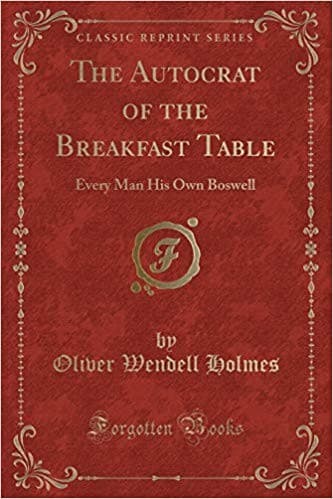
I am growing bolder as I write. I think it requires not only youth, but
genius, to read this paper. I don’t mean to imply that it required any
whatsoever to talk what I have here written down. It did demand a
certain amount of memory, and such command of the English tongue as is
given by a common school education. So much I do claim. But here I have
related, at length, a string of trivialities. You must have the
imagination of a poet to transfigure them. These little colored patches
are stains upon the windows of a human soul; stand on the outside, they
are but dull and meaningless spots of color; seen from within, they are
glorified shapes with empurpled wings and sunbright aureoles.
My hand trembles when I offer you this. Many times I have come bearing
flowers such as my garden grew; but now I offer you this poor, brown,
homely growth, you may cast it away as worthless. And yet—and yet—it is
something better than flowers; it is a _seed-capsule_. Many a gardener
will cut you a bouquet of his choicest blossoms for small fee, but he
does not love to let the seeds of his rarest varieties go out of his own
hands.
It is by little things that we know ourselves; a soul would very probably
mistake itself for another, when once disembodied, were it not for
individual experiences which differ from those of others only in details
seemingly trifling. All of us have been thirsty thousands of times, and
felt, with Pindar, that water was the best of things. I alone, as I
think, of all mankind, remember one particular pailful of water, flavored
with the white-pine of which the pail was made, and the brown mug out of
which one Edmund, a red-faced and curly-haired boy, was averred to have
bitten a fragment in his haste to drink; it being then high summer, and
little full-blooded boys feeling very warm and porous in the
low-“studded” school-room where Dame Prentiss, dead and gone, ruled over
young children, many of whom are old ghosts now, and have known Abraham
for twenty or thirty years of our mortal time.
Thirst belongs to humanity, everywhere, in all ages; but that white-pine
pail, and that brown mug belong to me in particular; and just so of my
special relationships with other things and with my rice. One could
never remember himself in eternity by the mere fact of having loved or
hated any more than by that of having thirsted; love and hate have no
more individuality in them than single waves in the ocean;—but the
accidents or trivial marks which distinguished those whom we loved or
hated make their memory our own forever, and with it that of our own
personality also.
Public-domain text, read in full here on John Shaqi.
Reviews
Reviews
No reviews yet
Be the first to share your thoughts on this work.
Elsewhere in the archive
Join the Discussion
Join the discussion
Sign in to leave a comment or review.
Sign InorCreate an account