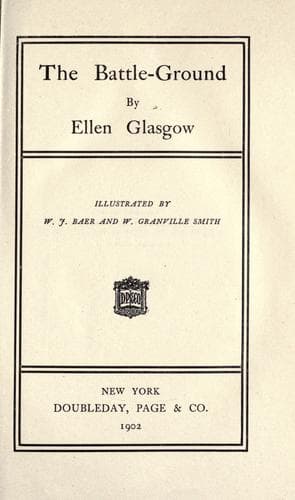
Historical fiction; Southern States -- History -- Fiction; United States -- History -- Civil War, 1861-1865 -- Fiction
At the hour of sunset, after many halts upon the way, they found themselves
alone and still facing the open road. Since midday they had stopped for
dinner with a hospitable farmer, and, some hours later, Big Abel had
feasted on wild grapes, which he had found hidden in the shelter of a
little wood. In the same wood a stream had tinkled over silver rocks, and
Dan, lying upon the bank of moss, had bathed his face and hands in the
clear water. Now, while the shadows fell in spires across the road, they
turned into a quiet country lane, and stood watching the sun as it dropped
beyond the gray stone wall. In the grass a small insect broke into a low
humming, and the silence, closing the next instant, struck upon Dan's ears
like a profound and solemn melody. He took off his cap, and still leaning
upon Big Abel, looked with rested eyes on the sloping meadow brushed with
the first gold of autumn. Something that was not unlike shame had fallen
over him--as if the horrors of the morning were a mere vulgar affront which
man had put upon the face of nature. The very anguish of the day obtruded
awkwardly upon his thoughts, and the wild clamour he had left behind him
showed with a savage crudeness against a landscape in which the dignity of
earth--of the fruitful life of seasons and of crops--produced in a solitary
observer a quiet that was not untouched by awe. Where nature was suggestive
of the long repose of ages, the brief passions of a single generation
became as the flicker of a candle or the glow of a firefly in the night.
“Dat's a steep road ahead er us,” remarked Big Abel suddenly, as he stared
into the shadows.
Dan came back with a start.
“Where shall we sleep?” he asked. “No, not in that field--the open sky
would keep me awake, I think. Let's bivouac in the woods as usual.”
They moved on a little way and entered a young pine forest, where Big Abel
gathered a handful of branches and kindled a light blaze.
“You ain' never eat nigger food, is you, Marse Dan?” he inquired as he did
so.
“Good Lord!” ejaculated Dan, “ask a man who has lived two months on
corn-field peas if he's eaten hog food, and he'll be pretty sure to answer
'yes.' Do you know we must have crawled about six miles to-day.” He lay
back on the pine tags and stared straight above where the long green
needles were illuminated on a background of purple space. A few fireflies
made golden points among the tree-tops.
“Well, I'se got a hunk er middlin',” pursued Big Abel thoughtfully, “a
strip er fat en a strip er lean des like hit oughter be--but a nigger
'ooman she gun hit ter me, en I 'low Ole Marster wouldn't tech hit wid a
ten-foot pole.” He stuck the meat upon the end of Dan's bayonet and held it
before the flames. “Ole Marster wouldn't tech hit, but den he ain' never
had dese times.”
“You're right,” replied Dan idly, filling his pipe and lighting it with a
small red ember, “and all things considered, I don't think I'll raise any
racket about that middling, Big Abel.”
Public-domain text, read in full here on John Shaqi.
Reviews
Reviews
No reviews yet
Be the first to share your thoughts on this work.
Elsewhere in the archive
Join the Discussion
Join the discussion
Sign in to leave a comment or review.
Sign InorCreate an account