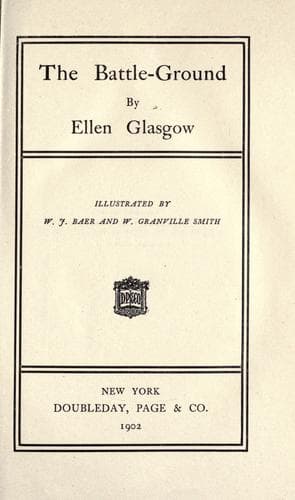
Historical fiction; Southern States -- History -- Fiction; United States -- History -- Civil War, 1861-1865 -- Fiction
As Betty entered the hall, the familiar sights of every day struck her eyes
with the smart of a physical blow. The excitement of the shock had passed
from her; there was no longer need to tighten the nervous strain, and
henceforth she must face her grief where the struggle is always hardest--in
the place where each trivial object is attended by pleasant memories. While
there was something for her hands to do--or the danger of delay in the long
watch upon the road--it had not been so hard to brace her strength against
necessity, but here--what was there left that she must bring herself to
endure? The torturing round of daily things, the quiet house in which to
cherish new regrets, and outside the autumn sunshine on the long white
turnpike. The old waiting grown sadder, was begun again; she must put out
her hands to take up life where it had stopped, go up and down the shining
staircase and through the unchanged rooms, while her ears were always
straining for the sound of the cannon, or the beat of a horse's hoofs upon
the road.
The brick wall around the little graveyard was torn down in one corner,
and, while the afternoon sun slanted between the aspens, the Governor was
laid away in the open grave beneath rank periwinkle. There was no minister
to read the service, but as the clods of earth fell on the coffin, Mrs.
Ambler opened her prayer book and Betty, kneeling upon the ground, heard
the low words with her eyes on the distant mountains. Overhead the aspens
stirred beneath a passing breeze, and a few withered leaves drifted slowly
down. Aunt Lydia wept softly, and the servants broke into a subdued
wailing, but Mrs. Ambler's gentle voice did not falter.
“He, cometh up, and is cut down, like a flower; he fleeth as it were a
shadow, and never continueth in one stay.”
She read on quietly in the midst of the weeping slaves, who had closed
about her. Then, at the last words, her hands dropped to her sides, and she
drew back while Uncle Shadrach shovelled in the clay.
“It is but a span,” she repeated, looking out into the sunshine, with a
light that was almost unearthly upon her face.
“Come away, mamma,” said Betty, holding out her arms; and when the last
spray of life-everlasting was placed upon the finished mound, they went out
by the hollow in the wall, turning from time to time to look back at the
gray aspens. Down the little hill, through the orchard, and across the
meadows filled with waving golden-rod, the procession of white and black
filed slowly homeward. When the lawn was reached each went to his
accustomed task, and Aunt Lydia to her garden.
An hour later the Major rode over in response to a message which had just
reached him.
“I was in town all the morning,” he explained in a trembling voice, “and I
didn't get the news until a half hour ago. The saddest day of my life,
madam, is the one upon which I learn that I have outlived him.”
“He loved you, Major,” said Mrs. Ambler, meeting his swimming eyes.
Public-domain text, read in full here on John Shaqi.
Reviews
Reviews
No reviews yet
Be the first to share your thoughts on this work.
Elsewhere in the archive
Join the Discussion
Join the discussion
Sign in to leave a comment or review.
Sign InorCreate an account