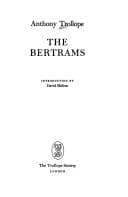
England -- Fiction; Love stories; Scholars -- Fiction
But on the head of his betrothed he poured out the vial of his wrath.
He had never before scolded her, had never written in an angry tone.
Now in very truth he did so. An angry letter, especially if the
writer be well loved, is so much fiercer than any angry speech, so
much more unendurable! There the words remain, scorching, not to be
explained away, not to be atoned for by a kiss, not to be softened
down by the word of love that may follow so quickly upon spoken
anger. Heaven defend me from angry letters! They should never be
written, unless to schoolboys and men at college; and not often to
them if they be any way tender hearted. This at least should be a
rule through the letter-writing world: that no angry letter be posted
till four-and-twenty hours shall have elapsed since it was written.
We all know how absurd is that other rule, that of saying the
alphabet when you are angry. Trash! Sit down and write your letter;
write it with all the venom in your power; spit out your spleen at
the fullest; 'twill do you good; you think you have been injured; say
all that you can say with all your poisoned eloquence, and gratify
yourself by reading it while your temper is still hot. Then put it
in your desk; and, as a matter of course, burn it before breakfast
the following morning. Believe me that you will then have a double
gratification.
A pleasant letter I hold to be the pleasantest thing that this world
has to give. It should be good-humoured; witty it may be, but with a
gentle diluted wit. Concocted brilliancy will spoil it altogether.
Not long, so that it be tedious in the reading; nor brief, so that
the delight suffice not to make itself felt. It should be written
specially for the reader, and should apply altogether to him, and not
altogether to any other. It should never flatter. Flattery is always
odious. But underneath the visible stream of pungent water there may
be the slightest under-current of eulogy, so that it be not seen, but
only understood. Censure it may contain freely, but censure which
in arraigning the conduct implies no doubt as to the intellect. It
should be legibly written, so that it may be read with comfort; but
no more than that. Caligraphy betokens caution, and if it be not
light in hand it is nothing. That it be fairly grammatical and not
ill spelt the writer owes to his schoolmaster; but this should come
of habit, not of care. Then let its page be soiled by no business;
one touch of utility will destroy it all.
If you ask for examples, let it be as unlike Walpole as may be. If
you can so write it that Lord Byron might have written it, you will
not be very far from high excellence.
But, above all things, see that it be good-humoured.
Public-domain text, read in full here on John Shaqi.
Reviews
Reviews
No reviews yet
Be the first to share your thoughts on this work.
Elsewhere in the archive
Join the Discussion
Join the discussion
Sign in to leave a comment or review.
Sign InorCreate an account