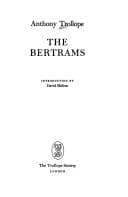
England -- Fiction; Love stories; Scholars -- Fiction
No educated woman, we may suppose, stands at the altar as a bride,
without having read and re-read those words till they are closely
fixed on her memory. It is a great oath, and a woman should know
well what that is to which she is about to pledge herself. Caroline
Waddington had studied them well. She would live with him after God's
ordinance; that is, as his wife. Yes, she was prepared for that. She
would obey him. Yes; if obedience were required, she would give it.
Serve him? oh, yes, certainly; to the best of her power of mind and
body. Love him? No; she was bold, at least, if not righteous. No; she
could not love him. But, then, how few who were married complied with
all those behests? How many were undutiful, disobedient, careless?
Might not she except for herself one point? be false on one article
if she were true in so many? She would honour him, for honour was
possible to her; she would keep him in sickness and health, and
forsaking all other--yes, all other, in body certainly, in heart
too if God would give her ease--and keep herself only to him, her
husband. And so she swore to it all before she went there--all, with
the one exception.
And Sir Henry swore too--with a light, indifferent oath, which,
however, he had no intention of breaking in any part. He would
live with her, and love her, and comfort her, and all that sort of
thing;--and very well she would look at the top of his table, in
black velvet.
And the merry bells went on ringing as they trooped back to the old
man's house. They went in gay carriages, though the distance was but
some hundred yards. But brides and bridegrooms cannot walk on their
wedding-days in all their gala garments, though it be but a few
hundred yards.
And then, as they entered the breakfast-room, the old man met them,
and blessed them. He was too infirm to go to church, and had seen
none of them before the ceremony; but now that the deed was done, he
also was there, dressed in his best, his last new coat, not more than
twelve years old, his dress waistcoat sent home before the Reform
Bill, his newest shoes, which creaked twice worse than any of their
older brethren. But when a man can shower thousands on a wedded pair,
what do they, or even the bridesmaids, care about his clothes?
And then after this fashion he blessed them--not holding each a hand
as he might otherwise have done; for his infirmities compelled him to
use two crutches.
"I wish you joy, Sir Henry--of your bride--with all my heart.
And a bonny bride she is, and well able to take her place in the
world. Though you'll be rich and well to do, you'll not find her
over-extravagant. And though her fortune's not much for a man like
you, perhaps, she might have had less, mightn't she? ha! ha! ha!
Little as it is, it will help--it will help. And you'll not find
debts coming home after her; I'm sure of that. She'll keep your house
well together; and your money too--but I guess you'll not leave that
to her keeping.
Public-domain text, read in full here on John Shaqi.
Reviews
Reviews
No reviews yet
Be the first to share your thoughts on this work.
Elsewhere in the archive
Join the Discussion
Join the discussion
Sign in to leave a comment or review.
Sign InorCreate an account