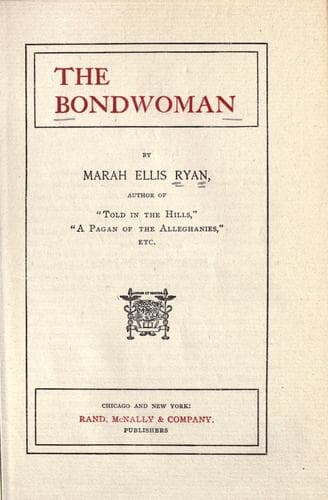
Man-woman relationships -- Fiction; Race relations -- Fiction; United States -- History -- Civil War, 1861-1865 -- Fiction
"I shall remember," she said, quietly, and walked to the window
looking out on the swaying limbs of the great trees; they were being
swept by gusts of wind, driving threatening clouds from which the trio
had ridden in haste lest a rain storm be back of their shadows. The
storm Monroe had prophesied the night before had delayed and grumbled
on the way, but it was coming for all that, and she welcomed the
coming. A storm would probably delay that guard for which McVeigh had
sent, and even the delay of a few hours might mean safety for Captain
Monroe; otherwise, she--
She had learned all about the adventures of the papers, and had made
her plans. Some time during that day or evening there would be a raid
made on the Terrace by Federals in Confederate uniform. They would
probably be thought by the inmates a party of daring foragers, and
would visit the smoke houses, and confiscate the contents of the
pantry. Incidentally they would carry Colonel McVeigh and Captain
Masterson back to the coast as prisoners, if the required papers were
not found, otherwise nothing of person or property would be molested
by them; and they would, of course, free Captain Monroe, but force
him, also, to go with them until within Federal lines and safety.
She had planned it all out, and knew it would not be difficult. The
coast was not far away, a group of men in Confederate uniform could
ride across the country to the Salkahatchie, at that point,
unobserved. The fortifications on the river had men coming and going,
though not thoroughly manned, and just now the upper one had no men
stationed there, which accounted for the fact that Colonel McVeigh had
to send farther for extra men. He could not spare his own orderlies,
and Masterson's had not yet returned from following Pierson. Unless
the raiders should meet with a detachment of bona-fide Confederates
there was not one chance in fifty of them being suspected if they came
by the back roads she had mapped out and suggested; and if they
reached the Terrace before the Confederate guard, Monroe would be
freed.
She had not known there was that hope when she wrote the note
consenting to the marriage. She heard they had sent down to the fort
for some men and supposed it was the first fort on the river--merely
an hour's ride away. It was not until they were in the saddle that she
learned it would be an all day's journey to the fort and back, and
that the colored carrier had just started.
She knew that if it were a possible thing some message would be sent
to her by the Federals as to the hour she might expect them, but if it
were not possible--well--
Public-domain text, read in full here on John Shaqi.
Reviews
Reviews
No reviews yet
Be the first to share your thoughts on this work.
Elsewhere in the archive
Join the Discussion
Join the discussion
Sign in to leave a comment or review.
Sign InorCreate an account