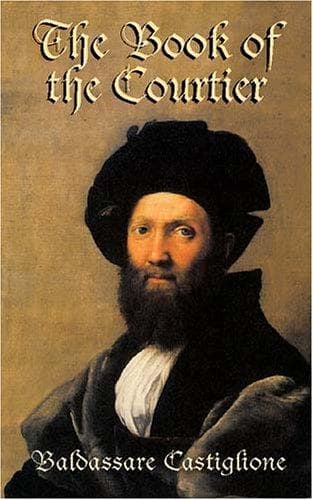
The Book of the CourtierCastiglione, Baldassarre, conte
History
The Book of the Courtier
Castiglione, Baldassarre, conte
Courtesy -- Early works to 1800; Courts and courtiers -- Early works to 1800
Here many replied together that it was still far from the usual hour for
ending the discussion. Then, turning to my lady Duchess and to my lady
Emilia, messer Bernardo said:
“I do not wish to escape this task; although, just as I am wont to
marvel at the presumption of those who venture to sing to the viol
before our friend Giacomo Sansecondo,[190] so I ought not to talk about
pleasantries before an audience who understand what I should say far
better than I.
“However, not to give any of these gentlemen a pretext for refusing the
charge that may be laid upon them, I will tell as briefly as I can what
occurs to me concerning the causes that excite laughter; which is so
peculiar to us that in defining man we are wont to say that he is a
laughing animal. For laughter is found only among men, and is nearly
always the sign of a certain hilarity felt inwardly in the mind, which
is by nature drawn towards amusement and longs for repose and
recreation; wherefore we see many things devised by men to this end,
such as festivals and different kinds of shows. And since we love those
who furnish us this recreation, it was the custom of ancient rulers
(Roman, Athenian and many others), in order to gain the people’s good
will and to feast the eyes and minds of the multitude, to erect great
theatres and other public edifices, and therein to exhibit new sports,
horse and chariot races, combats, strange beasts, comedies, tragedies
and mimes. Nor were such shows eschewed by grave philosophers, who in
sports of this kind and banquets often relaxed their minds when fatigued
by lofty discourse and spiritual meditation; which thing all kinds of
men also like to do: for not only toilers in the field, sailors, and all
those who perform hard and rough labour with their hands, but holy
priests, and prisoners awaiting death from hour to hour, all seek
continually some remedy and solace for their refreshment. Hence
everything that moves to laughter, cheers the mind and gives pleasure,
and for the moment frees us from the memory of those weary troubles of
which our life is full. So laughter, as you see, is very delightful to
all, and greatly to be praised is he who excites it reasonably and in a
graceful way.
“But what laughter is, and where it abides, and how it sometimes seizes
upon our veins, eyes, mouths and sides, and seems as if it would make us
burst, so that with all our effort it cannot be restrained,—I will leave
Democritus to tell, who could not even if he were to promise.[191]
46.—“Now the occasion and as it were the source from which the laughable
springs, lies in a kind of distortion; for we laugh only at those things
that have incongruity in them and that seem amiss without being so. I
know not how to explain it otherwise; but if you think of it yourselves,
you will see that what we laugh at is nearly always something that is
incongruous and yet is not amiss.
Public-domain text, read in full here on John Shaqi.
Reviews
Reviews
No reviews yet
Be the first to share your thoughts on this work.
Elsewhere in the archive
Join the Discussion
Join the discussion
Sign in to leave a comment or review.
Sign InorCreate an account