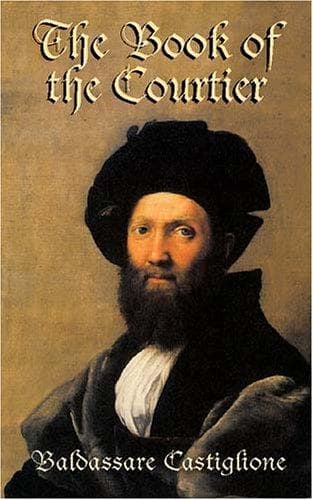
The Book of the CourtierCastiglione, Baldassarre, conte
History
The Book of the Courtier
Castiglione, Baldassarre, conte
Courtesy -- Early works to 1800; Courts and courtiers -- Early works to 1800
“But for us it is needful to give only a fleeting and covert imitation,
always preserving the dignity of a gentleman, without uttering foul
words or performing acts that are less than seemly, without contorting
the face or person beyond measure; but to order our movements in such
fashion that whoever hears and sees us may from our words and gestures
imagine far more than what he sees and hears, and so be moved to
laughter.
“Moreover in our imitation we ought to avoid too stinging jibes,
especially at deformities of face or person; for while bodily defects
often furnish excellent material for laughter to a man who uses them
with discretion, yet to employ this method too bitterly is the act not
only of a buffoon but of an enemy. So, although it be difficult, in this
regard we must, as I have said, keep to the manner of our friend messer
Roberto, who mimics all men and not without marking their defects
sharply even to their face, and yet no one is annoyed or seems to take
it amiss. And I will give no instance of this, because in him we see
countless examples of it every day.
51.—“Another thing excites much laughter, although it is included under
the head of narration; and that is to describe gracefully certain
defects of others,—unimportant ones however and undeserving greater
punishment, such as follies, sometimes mere absurdities or sometimes
accompanied by a quick and pungent dash of liveliness; likewise certain
extreme affectations; sometimes a huge and well-constructed lie. As
when, a few days since, our friend Cesare told of a delightful
absurdity, which was that finding himself before the Podestà of this
place,[200] he saw a peasant come in to complain of being robbed of a
donkey. The fellow told of his poverty and of the trick played upon him
by the thief, and then, to make out his loss the heavier, he said:
‘Masters, if you had seen my donkey, you would have better understood
how much cause I have to grieve; for when he had his pack on, he looked
like a very Tullius.’[201]
[Illustration:
ERCOLE D’ESTE
DUKE OF FERRARA
1431-1505
]
Reduced from a photograph, specially made by Mansell, of an anonymous
bas-relief in the South Kensington Museum,—possibly the work of
Sperandio di Bartolommeo de’ Savelli (1425?-1500?).
“And one of our friends, meeting a flock of goats with a great he-goat
at their head, stopped and said with a look of admiration: ‘See what a
he-goat! He looks like a Saint Paul.’[202]
Public-domain text, read in full here on John Shaqi.
Reviews
Reviews
No reviews yet
Be the first to share your thoughts on this work.
Elsewhere in the archive
Join the Discussion
Join the discussion
Sign in to leave a comment or review.
Sign InorCreate an account