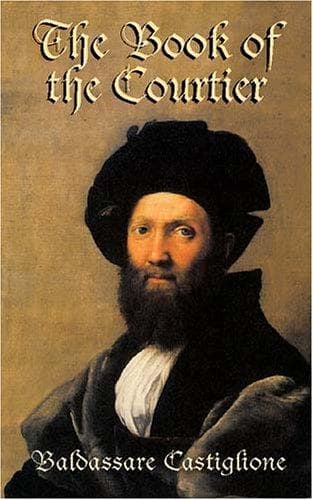
The Book of the CourtierCastiglione, Baldassarre, conte
History
The Book of the Courtier
Castiglione, Baldassarre, conte
Courtesy -- Early works to 1800; Courts and courtiers -- Early works to 1800
“How did you guess so well, my Lady, that I was speaking of friars, when
I did not name them? But in truth what I do is not called murmuring, for
I speak very openly and plainly; nor am I speaking of the good, but of
the bad and guilty, of whom moreover I do not tell the thousandth part
of what I know.”
“Do not speak of friars now,” replied my lady Emilia; “because for my
part I esteem it grievous sin to listen to you, and so I shall go away
in order not to listen to you.”
21.—“I am content,” said the Magnifico Giuliano, “to speak no more of
this; but returning to the praises of women, I say that my lord Gaspar
shall not find me an admirable man, but I will find you a wife or
daughter or sister of equal and sometimes greater merit. Moreover, many
women have been the cause of countless benefits to their men-folk, and
sometimes have corrected many a one of his errours. Wherefore, women
being (as we have shown) naturally capable of the same virtues as men,
and the effects thereof being often seen, I do not perceive why,—in
giving them what it is possible for them to have, what they more than
once have had and still have,—I should be regarded as relating miracles,
whereof my lord Gaspar has accused me; seeing that there have always
been on earth, and now still are, women as like the Court Lady I have
fashioned, as men like the man these gentlemen have fashioned.”
Then my lord Gaspar said:
“Those arguments that have experience against them do not seem to me
good; and certainly if I were to ask you who these great women were that
have been as worthy of praise as the great men whose wives or sisters or
daughters they were, or that have been the cause of any benefit, and who
those were that have corrected the errours of their men-folk,—I think
you would be embarrassed.”
22.—“Verily,” replied the Magnifico Giuliano, “no other thing could make
me embarrassed save their multitude; and had I time enough, I should
tell you here the story of Octavia,[345] wife of Mark Antony and sister
of Augustus; that of Porcia,[346] Cato’s daughter and wife of Brutus;
that of Caia Cæcilia,[347] wife of Tarquinius Priscus; that of
Cornelia,[348] Scipio’s daughter; and of countless others who are very
celebrated: and not only of our own, but of barbarian nations; as that
of Alexandra,[349] wife of Alexander king of the Jews, who,—after her
husband’s death, when she saw the people kindled with fury and already
up in arms to slay the two children that he had left her, in revenge for
the cruel and grievous bondage in which the father had always kept
them,—so acted that she soon appeased their just wrath, and by her
prudence straightway won over for her children those minds which the
father, by countless injuries during many years, had made very hostile
to his offspring.”
“At least tell us,” replied my lady Emilia, “how she did it.”
Public-domain text, read in full here on John Shaqi.
Reviews
Reviews
No reviews yet
Be the first to share your thoughts on this work.
Elsewhere in the archive
Join the Discussion
Join the discussion
Sign in to leave a comment or review.
Sign InorCreate an account