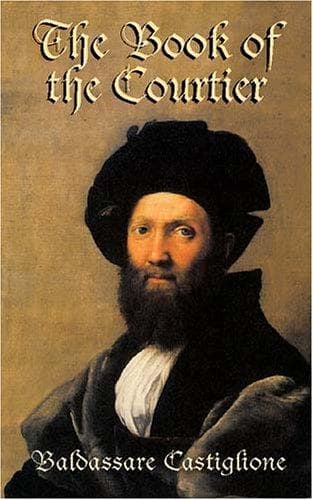
The Book of the CourtierCastiglione, Baldassarre, conte
History
The Book of the Courtier
Castiglione, Baldassarre, conte
Courtesy -- Early works to 1800; Courts and courtiers -- Early works to 1800
“Again, Cyrus having routed an army of Persians in battle, in fleeing to
their city they met their women outside the gate, who, stopping in the
way, said: ‘Whither do ye flee, base men? Would ye perchance hide
yourselves in us, from whence ye came?’ On hearing these and other like
words, and being sensible how inferior they were in courage to their
women, the men were ashamed, and returning against the enemy, fought
with him anew and routed him.”[377]
33.—Having thus far spoken, the Magnifico stopped, and turning to my
lady Duchess, said:
“Now, my Lady, you will give me leave to be silent.”
My lord Gaspar replied:
“You will forsooth have to be silent, for you do not know what more to
say.”
The Magnifico said, laughing:
“You provoke me so, that you run risk of having to listen to women’s
praises all night; and to hear of many Spartan women who rejoiced in the
glorious death of their children;[378] and of those who disowned or even
slew theirs when seen to behave basely. Then how in the ruin of their
country the Saguntine women took up arms against the forces of
Hannibal;[379] and how, when Marius overcame the army of the Germans,
the women, being unable to get leave to live free at Rome in the service
of the Vestal Virgins, all killed themselves and their little
children;[380] and of a thousand others whereof all the ancient
histories are full.”
Then my lord Gaspar said:
“Ah, my lord Magnifico, but God knows how those things happened; for
that age is so remote from us that many lies can be told and there is
none to refute them.”
34.—The Magnifico said:
“If in every age you will compare women’s worth with that of men, you
will find that they have never been and are not now at all inferior to
men in worth; for leaving aside the times that are so ancient, if you
come to the time when the Goths ruled in Italy, you will find that there
was a queen among them, Amalasontha,[381] who long reigned with
admirable wisdom; then Theodolinda,[382] queen of the Lombards, of
singular worth; Theodora,[383] the Greek empress; and in Italy among
many others the Countess Matilda was a most illustrious lady, of whose
praises I will leave Count Ludovico to speak, since she was of his
family.”[384]
“Nay,” said the Count, “that rests with you, for you know it does not
become a man to praise what is his own.”
The Magnifico continued:
Public-domain text, read in full here on John Shaqi.
Reviews
Reviews
No reviews yet
Be the first to share your thoughts on this work.
Elsewhere in the archive
Join the Discussion
Join the discussion
Sign in to leave a comment or review.
Sign InorCreate an account