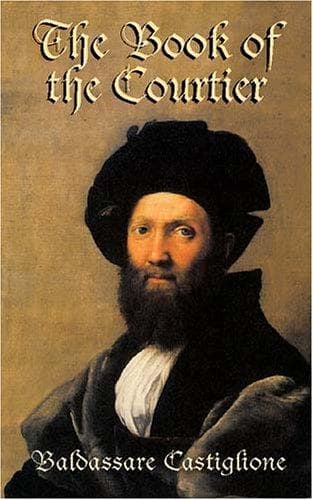
The Book of the CourtierCastiglione, Baldassarre, conte
History
The Book of the Courtier
Castiglione, Baldassarre, conte
Courtesy -- Early works to 1800; Courts and courtiers -- Early works to 1800
“Therefore the course of conduct that I wish my Court Lady to pursue in
love talk, will be to refuse always to believe that whoever pays court
to her for that reason loves her: and if the gentleman shall be as pert
as many are, and speak to her with small respect, she will give him such
answer that he may clearly understand he is causing her annoyance.
Again, if he shall be discreet and use modest phrases and words of love
covertly, with that gentle manner which I think the Courtier fashioned
by these gentlemen will employ, the lady will feign not to understand
and will apply his words in another sense, always modestly trying to
change the subject with that skill and prudence which have been said
befit her. If, again, the talk is such that she cannot feign not to
understand, she will take it all as a jest, pretending to be aware that
it is said to her more out of compliment to her than because it is so,
depreciating her merits and ascribing the praises that he gives her to
the gentleman’s courtesy; and in this way she will win a name for
discretion and be safer against deceit.
“After this fashion methinks the Court Lady ought to conduct herself in
love talk.”
55.—Then messer Federico said:
“My lord Magnifico, you discourse of this matter as if everyone who pays
court to women must needs speak lies and seek to deceive them: if the
which were true, I should say that your teachings were sound; but if
this cavalier who is speaking loves truly and feels that passion which
sometimes so sorely afflicts the human heart, do you not consider in
what pain, in what calamity and mortal anguish you put him by insisting
that the lady shall never believe anything he says on this subject?
Ought his supplications, tears, and many other signs to go for naught?
Have a care, my lord Magnifico, lest it be thought that besides the
natural cruelty which many of these ladies have in them, you are
teaching them still more.”
The Magnifico replied:
“I spoke not of him who loves, but of him who entertains with amourous
talk, wherein one of the most necessary conditions is that words shall
never be lacking. But just as true lovers have glowing hearts, so they
have cold tongues, with broken speech and sudden silence; wherefore
perhaps it would not be a false assumption to say: ‘Who loves much,
speaks little.’ Yet as to this I believe no certain rule can be given,
because of the diversity of men’s habits; nor could I say anything more
than that the Lady must be very cautious, and always bear in mind that
men can declare their love with much less danger than women can.”
56.—Then my lord Gaspar said, laughing:
Public-domain text, read in full here on John Shaqi.
Reviews
Reviews
No reviews yet
Be the first to share your thoughts on this work.
Elsewhere in the archive
Join the Discussion
Join the discussion
Sign in to leave a comment or review.
Sign InorCreate an account