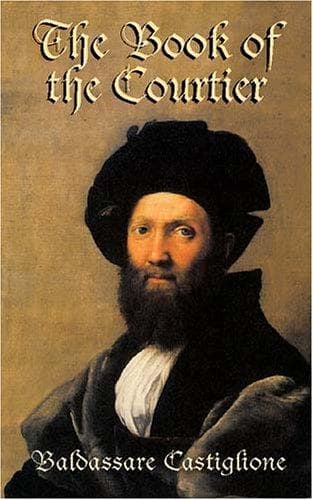
The Book of the CourtierCastiglione, Baldassarre, conte
History
The Book of the Courtier
Castiglione, Baldassarre, conte
Courtesy -- Early works to 1800; Courts and courtiers -- Early works to 1800
Then my lord Ottaviano said:
“Which captain would you deem of greater worth, the one who fighting
openly puts himself in danger and yet conquers the enemy, or the one who
by his ability and skill deprives them of their strength, reducing them
to such straits that they cannot fight, and thus conquers them without
any battle or danger whatever?”
“The one,” said the Magnifico Giuliano, “who more safely conquers is
without doubt more to be praised, provided this safe victory of his do
not proceed from the cowardice of the enemy.”
My lord Ottaviano replied:
“You have judged rightly; and hence I tell you that continence may be
likened to a captain who fights manfully, and although the enemy be
strong and powerful, still conquers them, albeit not without great
difficulty and danger. While temperance unperturbed is like that captain
who conquers and rules without opposition, and having not only abated
but quite extinguished the fire of lust in the mind where she abides,
like a good prince in time of civil strife, she destroys her seditious
enemies within, and gives reason the sceptre and whole dominion.
“Thus this virtue does not compel the mind, but infusing it by very
gentle means with a vehement belief that inclines it to righteousness,
renders it calm and full of rest, in all things equal and well measured,
and disposed on every side by a certain self-accord which adorns it with
a tranquillity so serene that it is never ruffled, and becomes in all
things very obedient to reason and ready to turn its every act thereto
and to follow wherever reason may wish to lead it, without the least
unwillingness; like a tender lambkin, which always runs and stops and
walks near its dam, and moves only with her.
“This virtue, then, is very perfect and especially befitting to princes,
because from it spring many others.”
18.—Then messer Cesare Gonzaga said:
“I do not know what virtues befitting to a lord can spring from this
temperance, if it is the one which removes the passions from the mind,
as you say. Perhaps this would be fitting in a monk or hermit; but I am
by no means sure whether it would befit a prince (who was magnanimous,
liberal and valiant in arms) never to feel, whatever might be done to
him, either wrath or hate or good will or scorn or lust or passion of
any kind, and whether he could without this wield authority over
citizens or soldiers.”
My lord Ottaviano replied:
Public-domain text, read in full here on John Shaqi.
Reviews
Reviews
No reviews yet
Be the first to share your thoughts on this work.
Elsewhere in the archive
Join the Discussion
Join the discussion
Sign in to leave a comment or review.
Sign InorCreate an account