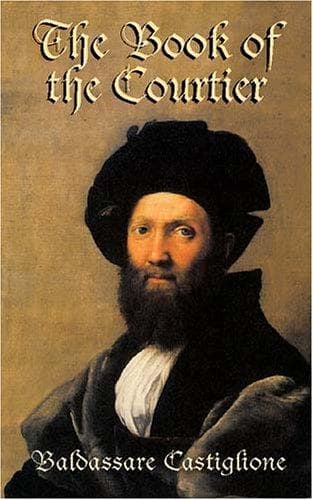
The Book of the CourtierCastiglione, Baldassarre, conte
History
The Book of the Courtier
Castiglione, Baldassarre, conte
Courtesy -- Early works to 1800; Courts and courtiers -- Early works to 1800
33.—“Next I should tell how he ought to love his land and people, not
holding them too much in bondage, lest he make himself odious to them,
from which thing there arise seditions, conspiracies and a thousand
other evils; nor yet in too great freedom, lest he be despised, from
which proceed licentious and dissolute life among his people, rapine,
theft, murder, without any fear of the law; often the ruin and total
destruction of city and realms. Next, how he ought to love those near
him according to their degree, maintaining among all men an even
equality in some things, as in justice and liberty; and in certain other
things a judicious inequality, as in being generous, in rewarding, in
distributing honours and dignities according to the inequality of their
merits, which always ought not to exceed but to be exceeded by their
rewards; and that in this way he would be not merely loved but almost
adored by his subjects. Nor would there be need that he should turn to
aliens for the safeguard of his life, because his own people for their
very profit would guard it with their own, and all men would gladly obey
the laws, when they found that he himself obeyed and was as it were the
guardian and incorruptible minister of the same; and thus he would make
so strong an impression in this matter, that even if he sometimes
chanced to infringe the laws in some particular, everyone would feel
that it was done for a good end, and the same respect and reverence
would be paid to his wish as to the law itself.
“Thus the minds of his subjects would be so tempered that the good would
not seek for more than they needed, and the bad could not; for excessive
riches are oftentimes the cause of great ruin, as in poor Italy, which
has been and still is exposed as a prey to foreign nations, both because
of bad government and because of the great riches of which it is full.
Hence it were well to have the greater part of the citizens neither very
rich nor very poor, for the over-rich often become insolent and rash;
the poor, base and dishonest; but men of moderate fortune do not lay
snares for others, and live safe from being snared: and being the
greater number, these men of moderate fortune are also more powerful;
and therefore neither the poor nor the rich can conspire against the
prince or other men, nor can they sow seditions; wherefore, in order to
avoid this evil, it is a very wholesome thing to preserve a mean in all
things.
Public-domain text, read in full here on John Shaqi.
Reviews
Reviews
No reviews yet
Be the first to share your thoughts on this work.
Elsewhere in the archive
Join the Discussion
Join the discussion
Sign in to leave a comment or review.
Sign InorCreate an account