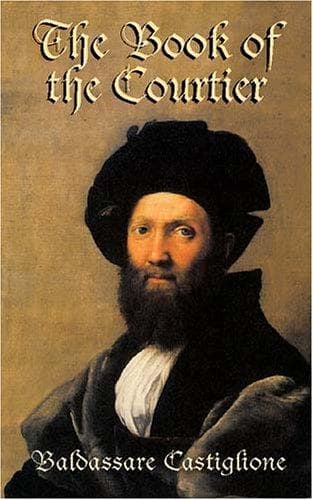
The Book of the CourtierCastiglione, Baldassarre, conte
History
The Book of the Courtier
Castiglione, Baldassarre, conte
Courtesy -- Early works to 1800; Courts and courtiers -- Early works to 1800
“Hence, to escape the torment of this absence and to enjoy beauty
without suffering, there is need that the Courtier should, with the aid
of reason, wholly turn his desire from the body to the beauty alone, and
contemplate it in itself simple and pure, as far as he can, and fashion
it in his imagination apart from all matter; and thus make it lovely and
dear to his soul, and enjoy it there, and have it with him day and
night, in every time and place, without fear of ever losing it; bearing
always in mind that the body is something very different from beauty,
and not only does not enhance it, but diminishes its perfection.
“In this wise will our unyouthful Courtier be beyond all the bitterness
and calamities that the young nearly always feel: such as jealousies,
suspicions, disdainings, angers, despairings, and certain furies full of
madness whereby they are often led into such errour that some of them
not only beat the women whom they love, but deprive themselves of life.
He will do no injury to the husband, father, brothers or kinsfolk of his
beloved lady; he will put no infamy upon her; he will never be forced to
bridle his eyes and tongue with such difficulty in order not to disclose
his desires to others, or to endure suffering at partings or
absences;—because he will always carry his precious treasure with him
shut up in his heart, and also by force of his imagination he will
inwardly fashion her beauty much more beautiful than in fact it is.
67.—“But besides these blessings the lover will find another much
greater still, if he will employ this love as a step to mount to one
much higher; which he will succeed in doing if he continually considers
within himself how narrow a restraint it is to be always occupied in
contemplating the beauty of one body only; and therefore, in order to
escape such close bounds as these, in his thought he will little by
little add so many ornaments, that by heaping all beauties together he
will form an universal concept, and will reduce the multitude of these
beauties to the unity of that single beauty which is spread over human
nature at large. In this way he will no longer contemplate the
particular beauty of one woman, but that universal beauty which adorns
all bodies; and thus, bewildered by this greater light, he will not heed
the lesser, and glowing with a purer flame, he will esteem lightly that
which at first he so greatly prized.
Public-domain text, read in full here on John Shaqi.
Reviews
Reviews
No reviews yet
Be the first to share your thoughts on this work.
Elsewhere in the archive
Join the Discussion
Join the discussion
Sign in to leave a comment or review.
Sign InorCreate an account