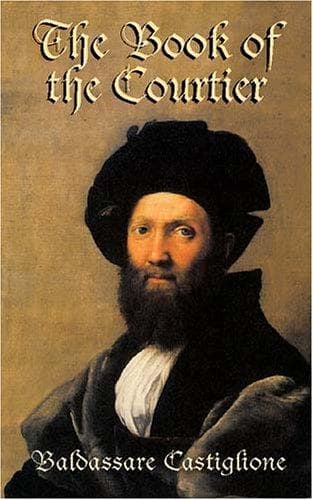
The Book of the CourtierCastiglione, Baldassarre, conte
History
The Book of the Courtier
Castiglione, Baldassarre, conte
Courtesy -- Early works to 1800; Courts and courtiers -- Early works to 1800
The earliest Spanish translator, BOSCAN, (born at Barcelona about 1493;
died in France about 1542), was of gentle birth. Early becoming a
soldier, he served with credit in Charles V's Italian campaigns, and
thus acquired familiarity with the language and literature of Italy. He
is said to have known Castiglione personally. Having been for some time
tutor to the young prince who was later known as the Duke of Alva, he
married and devoted the rest of his short life to letters. As a writer
he is best known as the founder of the Italian poetical school in Spain.
Ticknor says that Boscan’s version of THE COURTIER hardly professes to
be literal, but that perhaps nothing in Castilian prose of an earlier
date is written in so classical and finished a style. It has been often
reprinted (as recently as 1873), and was found useful by the present
translator in doubtful passages.
The earliest French translator, COLIN, (died 1547), was a native of
Auxerre and enjoyed the favour of Francis I, whom he served as reader
and almoner, and who bestowed upon him the abbotship of St. Ambrose at
Tours, as well as other ecclesiastical offices. In his prosperity he
showed much kindness to his less fortunate brother authors, but he was
too free of speech to be permanently successful as a courtier, and lost
his preferments. His translation of THE COURTIER, which some writers
erroneously ascribe to Jean Chaperon, is little esteemed, was soon
issued with corrections by another hand, and then followed by another
French version. He translated also parts of Homer and Ovid, and composed
original verse in Latin and French. For an account of Castiglione’s
influence upon French literature and of his many French imitators,
consult Pietro Toldo’s “Le Courtisan dans la littérature française et
ses rapports avec l'œuvre du Castiglione,” (Archiv für das Studium der
Neueren Sprachen und Litteraturen, C. iv, pp. 75 and 313, and C. v, p.
60).
Public-domain text, read in full here on John Shaqi.
Reviews
Reviews
No reviews yet
Be the first to share your thoughts on this work.
Elsewhere in the archive
Join the Discussion
Join the discussion
Sign in to leave a comment or review.
Sign InorCreate an account